


MEP Installation Services for Construction and Industrial Projects
MEP is the “nervous system” of buildings and factories, directly affecting operation, safety, energy efficiency, downtime and lifecycle cost.
1. What is MEP?
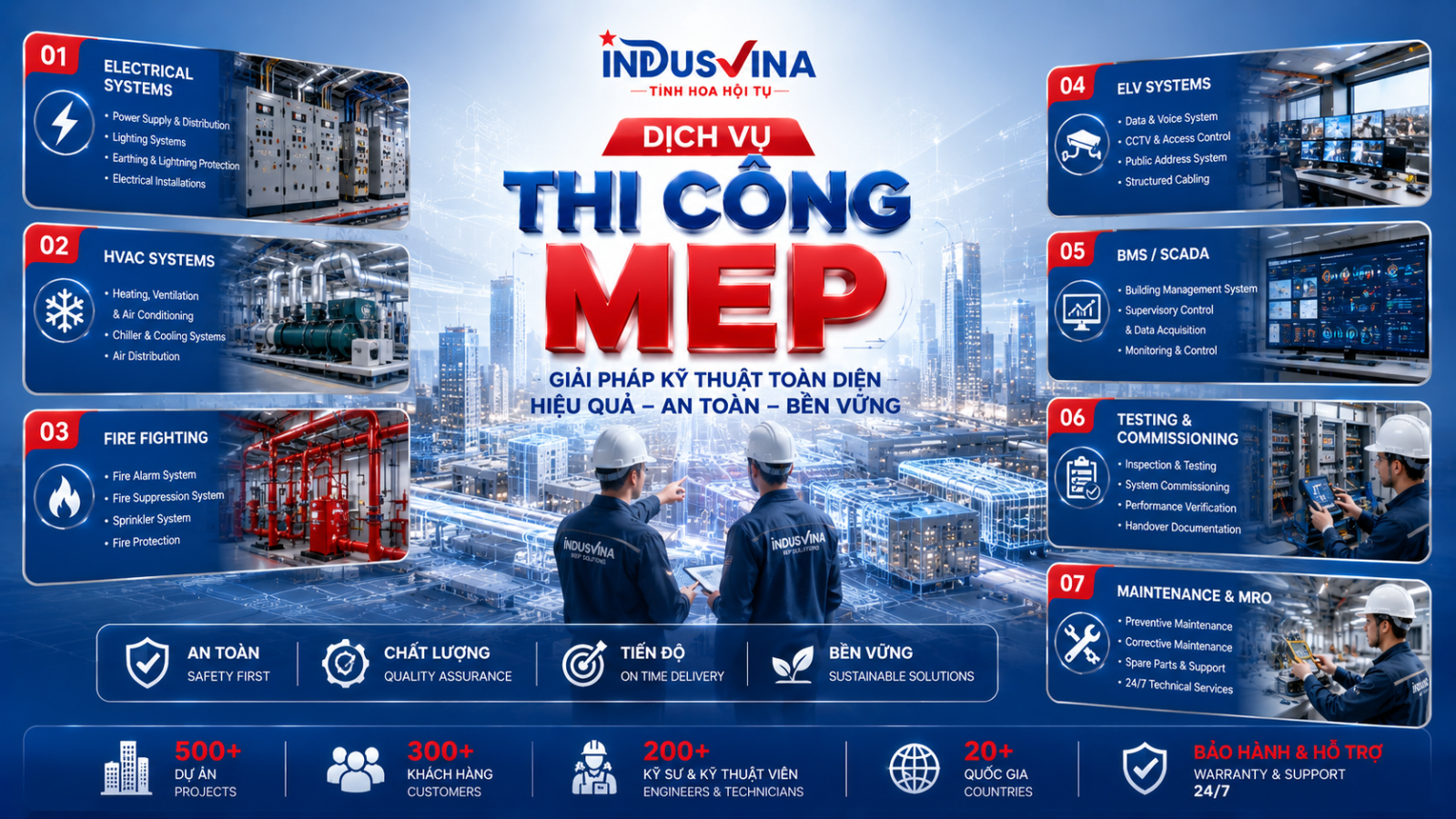
MEP / M&E refers to the mechanical, electrical, control and operation systems of buildings and factories, including power supply, lighting, ELV, HVAC, ventilation, fire protection, BMS, SCADA, PLC and related technical systems.
If structure is the skeleton and architecture is the appearance, then MEP is the nervous system that keeps a building operating safely, stably and efficiently.
2. Scope of MEP Installation Services
Technical Consulting & Design
- Survey of existing conditions and operational needs.
- Concept design, technical design and shop drawings.
- Optimization of function, cost, energy and maintenance.
Installation & Construction
- Installation of HVAC, electrical, ELV, fire protection and BMS systems.
- Installation of equipment, cable trays, piping, compressed air and cooling water systems.
- Control of schedule, quality, safety and inspection works.
Testing & Commissioning
- Installation checks, leak test, flushing and balancing.
- Load testing and parameter adjustment.
- Handover of as-built drawings, O&M manuals, checklists and operation guidance.
Maintenance & MRO
- Periodic and preventive maintenance.
- Failure analysis and downtime reduction.
- System upgrading and spare parts management.

3. Typical MEP Work Items
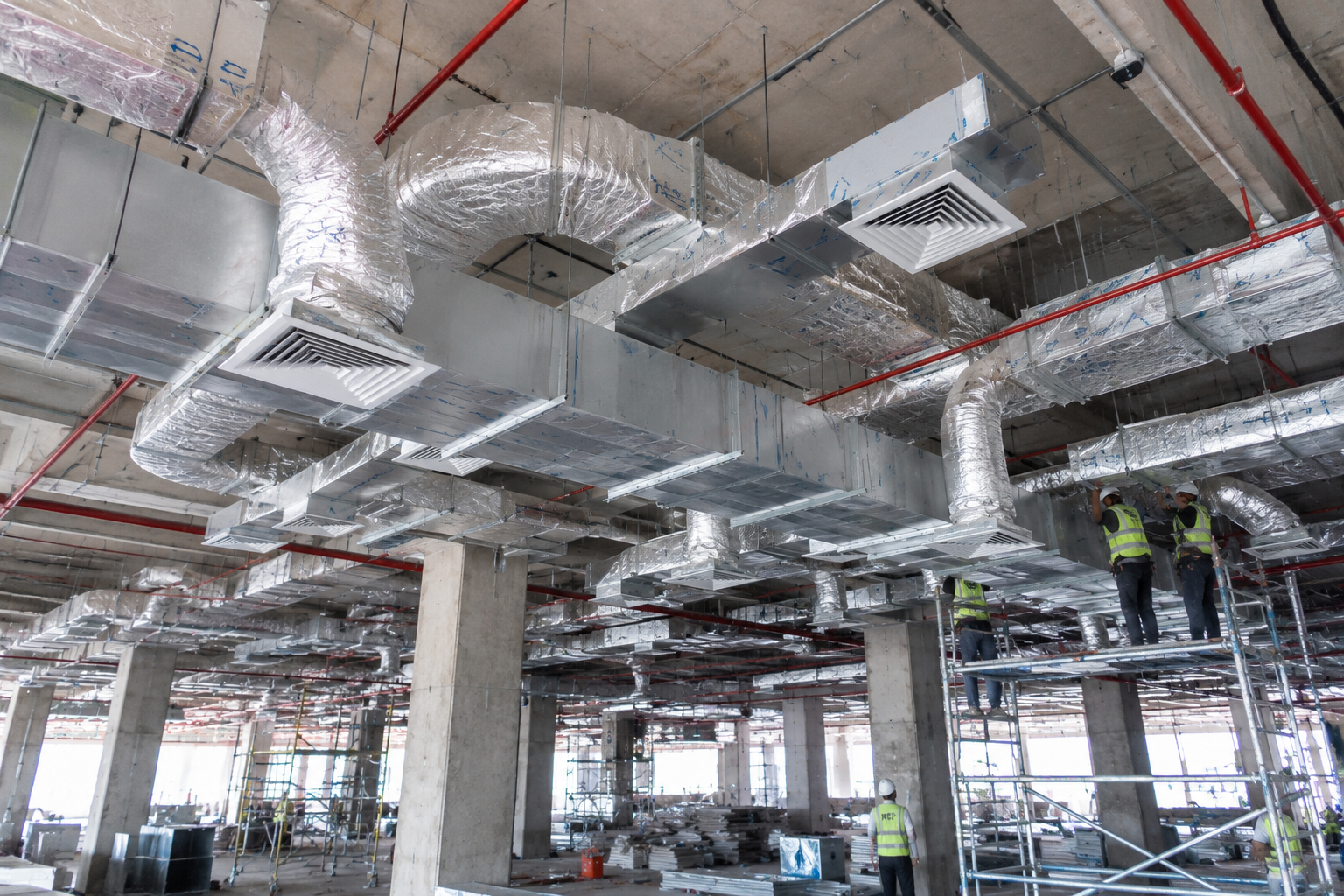
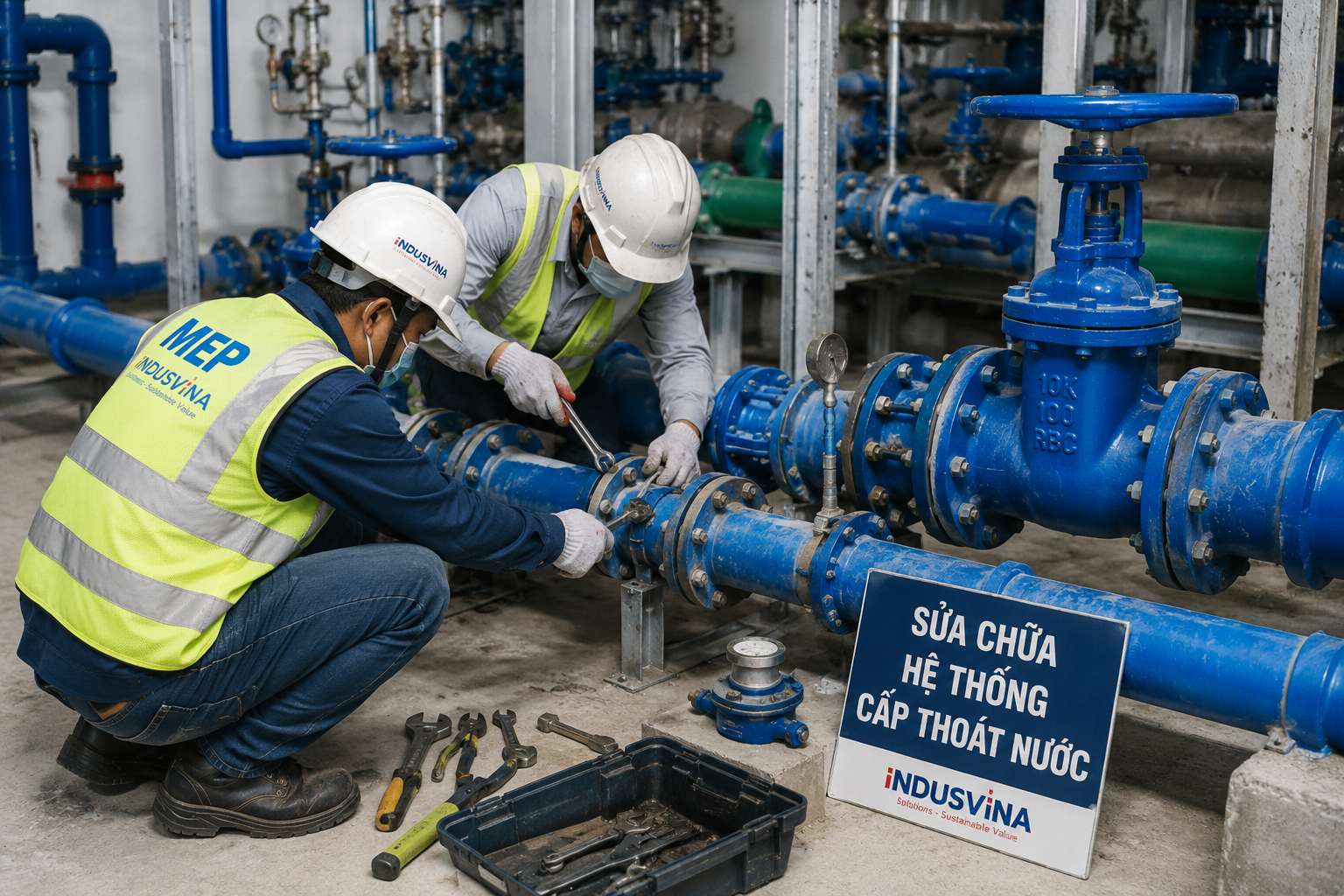
4. Why MEP Determines Building Quality
- Safety: control of electrical systems, fire protection, working environment and equipment operation.
- Efficiency: reduced energy consumption and optimized control by load demand.
- Reliability: reduced downtime and improved redundancy.
- Lifecycle cost: lower repair costs and longer equipment life.
- Expandability: clear systems that can be upgraded when the factory or building grows.
5. MEP Implementation Process
Step 1: Survey
Review existing conditions, operational needs, layout, load requirements and construction constraints.
Step 2: Solution Proposal
Propose technical solutions suitable for function, budget, schedule and project standards.
Step 3: Shop Drawings
Prepare construction drawings and coordinate with architecture, structure, ceiling, equipment and related systems.
Step 4: Installation
Organize manpower, materials, method statements, safety and quality control on site.
Step 5: Commissioning
Conduct testing and commissioning based on checklists, operating loads, technical parameters and acceptance conditions.
Step 6: Handover & Maintenance
Handover documents, provide operation guidance and connect the system with the MRO maintenance plan after operation.
6. Common Risks in MEP Projects
- Poor design coordination can cause site conflicts and cost overruns.
- Excessive schedule pressure may lead to skipped testing and commissioning.
- Wrong equipment selection can reduce performance and service life.
- No maintenance planning from the beginning can make future operation difficult.
7. INDUSVINA’s Practical Capability
INDUSVINA has grown from real industrial operation experience, connecting MRO – M&E – Construction – Export capabilities to serve factories, projects and supply chains.
- Established in 2013.
- Experience in factory maintenance, mechanical & electrical works, construction and technical supply.
- Implementation approach based on responsibility, quality, safety and long-term value.
- Connection between MEP installation and MRO maintenance after handover.
8. Current MEP Trends
- Integrated design between architecture, structure, technology and operation.
- BIM application to reduce conflicts and control quantities.
- Energy optimization for green buildings and efficient factories.
- Smart Building / Smart Factory with BMS, SCADA and IoT.
- Design for Maintenance: systems designed for faster, safer maintenance with less downtime.
9. Conclusion
- MEP determines the real operational capability of buildings and factories.
- Proper design helps reduce lifecycle cost.
- Proper installation helps reduce risks and downtime.
- Proper commissioning ensures the system is ready for operation.
- Proper maintenance extends equipment life.
Related Articles
FAQ – Frequently Asked Questions about MEP Installation Services
What is MEP?
MEP refers to the mechanical, electrical, control and operation systems of buildings and factories, including electrical systems, HVAC, ventilation, fire protection, BMS, SCADA, PLC and related technical systems.
What does MEP installation service include?
It includes technical consulting, design, installation, testing & commissioning, acceptance, handover and MRO maintenance.
Why is testing & commissioning important?
It is the key step before handover, helping ensure that the system operates under proper load, correct parameters and safe conditions.
How is MEP related to MRO maintenance?
Well-designed and properly installed MEP systems make maintenance easier, reduce downtime, lower repair costs and extend equipment life.
When should a company contact an MEP contractor?
It is best to involve an MEP contractor from the design or early renovation stage to control technical requirements, cost, operation and maintenance from the beginning.
Connect with INDUSVINA
INDUSVINA is ready to support Customers and Partners in MEP installation, construction, MRO maintenance, technical supply and export needs.
0979 823 639
info@indusvina.com
www.indusvina.com
Ho Chi Minh City, Vietnam


