


Main Responsibilities of a Project Manager
Project management is not only about tracking progress. It is the process of coordinating people, engineering, safety, quality, cost, documentation and cash flow so that the project is completed according to its commitments.
The main responsibility of a project manager is to turn the owner’s objectives and the contract requirements into a clear execution plan: who does what, when it must be completed, which standards must be met, which risks must be controlled and which documents must be completed.
1. Prepare the overall project plan
The project manager must clearly understand the work scope, contract, drawings, technical standards, schedule milestones and available resources. The clearer the plan is, the less disorder there will be on site.
- Define the work scope and responsibility boundaries.
- Prepare the master schedule, weekly schedule and key acceptance milestones.
- Forecast manpower, equipment, materials, subcontractors and budget.
- Identify risks from the beginning to establish control measures.
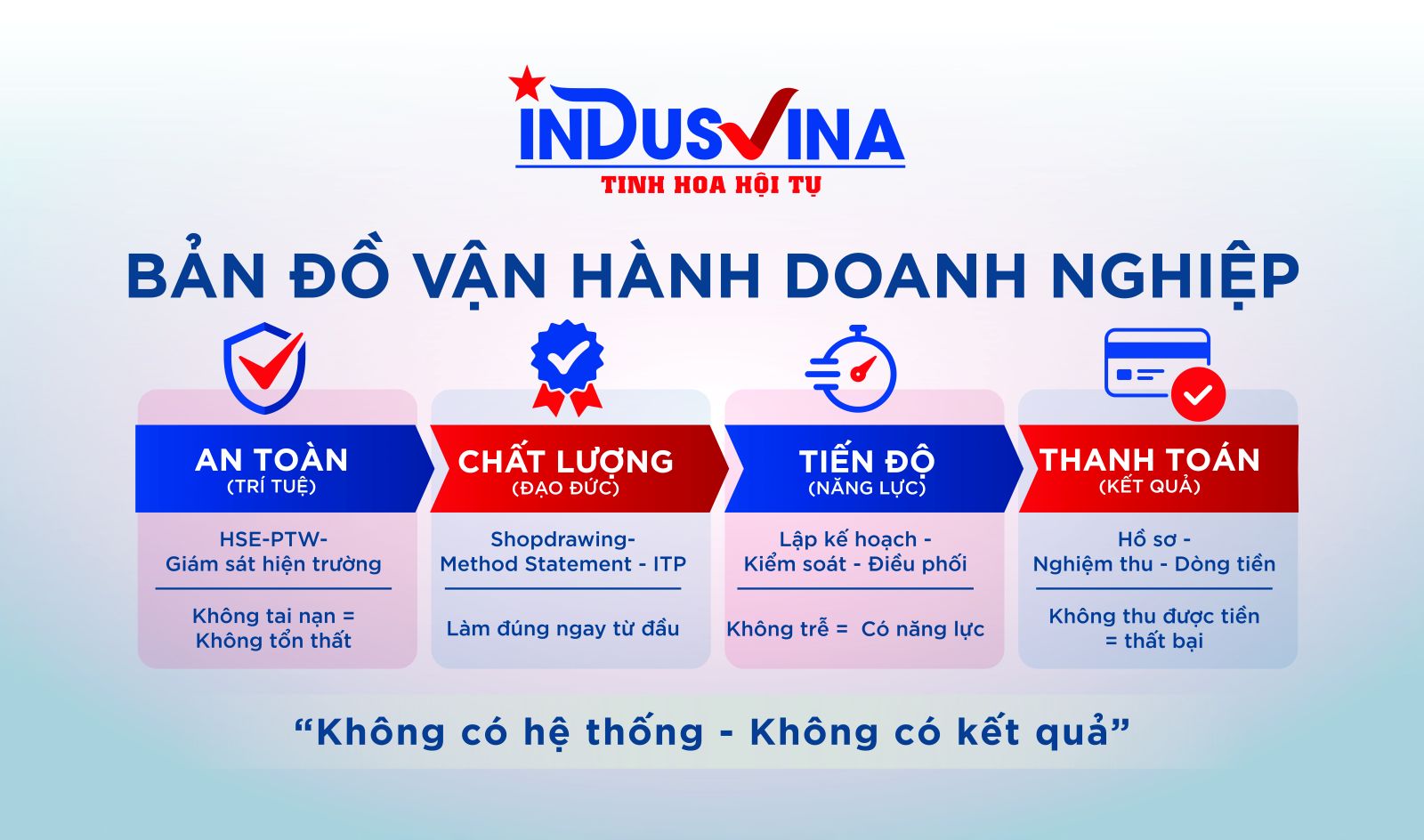
2. Coordinate personnel, materials and subcontractors
A project can only run well when all parties are coordinated in the right rhythm. The project manager must clarify who is responsible, when handovers take place, which bottlenecks must be solved and how teams coordinate with one another.
Resource coordination
Ensure manpower, equipment, materials and subcontractors arrive at the right time, in the right quantity and with the required quality.
Information coordination
Information from the owner, consultants, designers, site teams and suppliers must be clearly updated, not passed around through vague verbal communication.
3. Control construction safety
Safety is the top priority. A project may slow down in order to do things correctly, but it must never move forward by ignoring safety measures.
- Review construction method statements before execution.
- Organize safety briefings for construction teams and subcontractors.
- Control hazardous areas, lifting equipment, electrical works, hot works and work at height.
- Stop work when a serious safety risk is detected.
4. Control quality and acceptance
Quality must be controlled from incoming materials, construction methods and installation works to internal inspection and acceptance with relevant parties.
| Control item | Required action | Objective |
|---|---|---|
| Materials | Check origin, certificates, specifications and standards. | Avoid wrong materials and prevent system-level defects. |
| Construction | Inspect according to drawings, method statements, checklists and technical standards. | Do it right the first time and reduce rework. |
| Acceptance | Prepare minutes, photos, daily logs and quality documents. | Create a clear basis for confirming quantity and quality. |
5. Control schedule and resolve bottlenecks
The schedule is not just a plan posted on the wall. It must be tracked through actual site conditions, completed output, material arrival and the coordination capability of different teams.
- Update daily, weekly and milestone progress.
- Identify bottlenecks: drawings, materials, site access, manpower and equipment.
- Propose recovery plans without compromising safety and quality.
- Report delay risks early so all parties can act together.
6. Control cost, variations and cash flow
The project manager must understand cost because every site decision affects profit, cash flow and payment capability.
- Control actual construction quantities against the contract.
- Record variations promptly with documents, photos and site confirmations.
- Track labor, equipment, material and subcontractor costs.
- Prepare payment documents for each project stage.
7. Manage documents, reports and project communication
A project may be executed well, but weak documentation can still cause difficulties in acceptance, payment or dispute handling. Therefore, document management is a critical responsibility.
Technical documents
Drawings, method statements, material approvals, checklists and internal acceptance records.
Site documents
Daily logs, photos, meeting minutes, variation records and quantity confirmations.
Progress reports
Output, bottlenecks, risks, next-week plans and proposed solutions.
Payment documents
Quantities, acceptance records, as-built drawings, supporting documents and variation appendices if any.
8. Practical project management process
Step 1: Understand the contract and scope
Carefully review the contract, drawings, standards, payment terms and handover milestones.
Step 2: Prepare the execution plan
Break the work into stages, assign responsible persons and identify required resources.
Step 3: Control site execution
Monitor safety, quality, schedule, materials, manpower and site issues every day.
Step 4: Report and adjust
Report based on actual data, not feelings. Risks must be reported early and variations must be documented immediately.
Step 5: Acceptance, payment and handover
Complete the documentation, confirm quantities, accept quality and hand over according to commitments.
9. INDUSVINA experience
- Do not manage projects by feelings; there must be plans, data and documents.
- Do not let site execution run too far ahead of technical documentation.
- Do not wait until the end of the project to collect acceptance documents.
- Do not trade safety and quality for short-term schedule pressure.
- Do not accept verbal variations; every change must be confirmed in writing or by minutes.
10. Frequently Asked Questions
How is a project manager different from a site commander?
The site commander focuses on site execution. The project manager has a wider scope: contract, schedule, cost, documents, risks, acceptance and payment.
What is the most important responsibility of a project manager?
It is to control the whole project so that it is safe, meets quality requirements, stays on schedule, controls cost and has complete payment documents.
Is weekly progress reporting necessary?
Yes. Weekly reports help all parties clearly see output, bottlenecks, risks and action plans before issues become serious.
Why are project documents important?
Documents are the basis for acceptance, payment, handover and protection of all parties when variations or disputes arise.
What does INDUSVINA support in project management?
INDUSVINA supports construction execution, maintenance, M&E, industrial construction, documentation management and project coordination in a practical, disciplined and transparent manner.
Need a disciplined project execution partner?
INDUSVINA is ready to accompany owners, contractors and technical partners in maintenance, M&E, industrial construction and material supply projects.
Contact INDUSVINA


