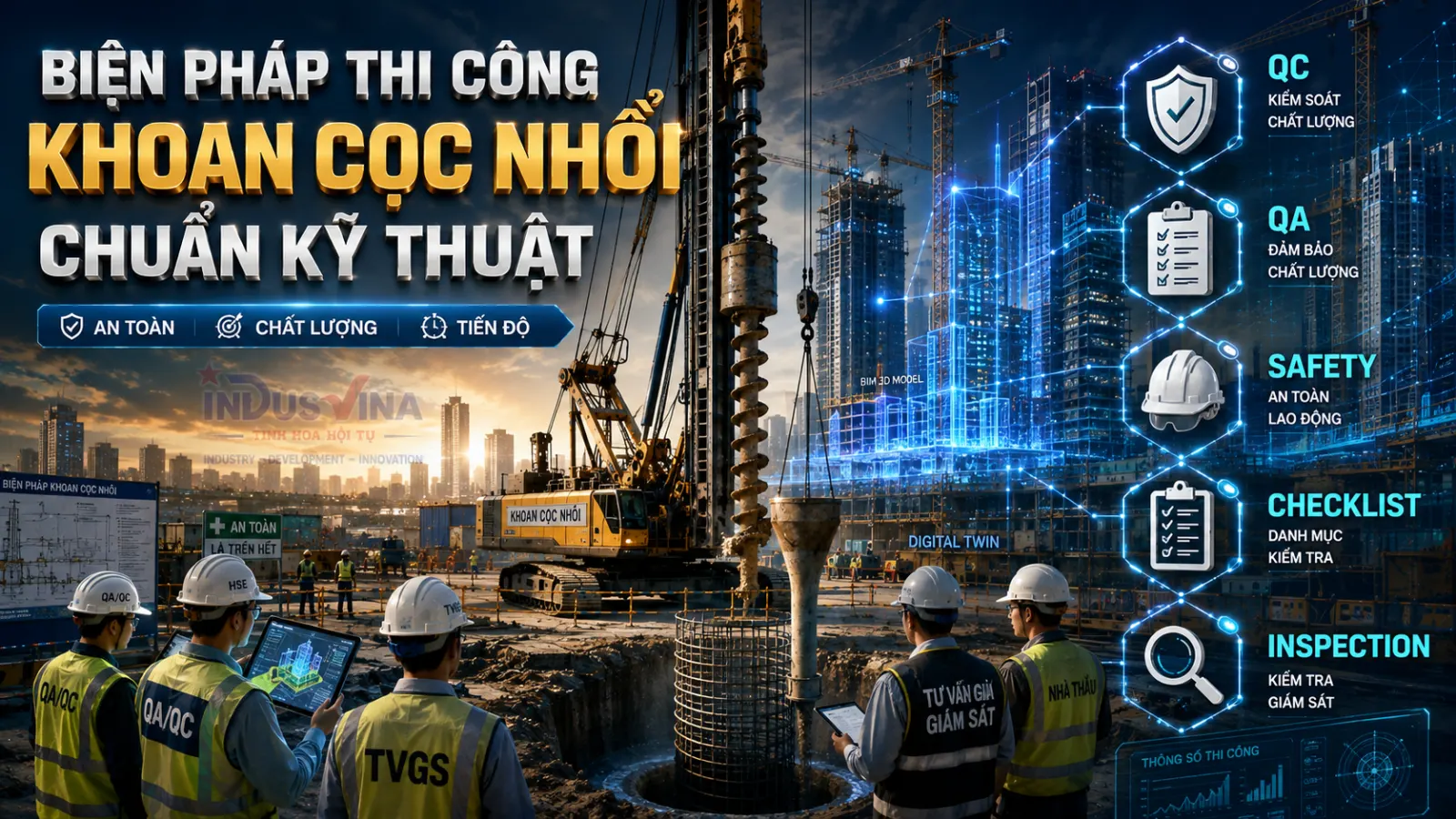
FOUNDATION KNOWLEDGE · SITE CONTROL
Bored pile construction.
Control starts at the base.
Pile quality is determined before concrete conceals the work. Understanding the sequence, inspection gates and stop conditions helps project teams reduce defects that are difficult to repair.
Before mobilising the rig
This is an educational overview. The project documents must define the sequence, acceptance limits and approval authority. It does not replace the design or approved method statement.
Ground & design
Review ground investigation, groundwater, pile diameter, depth and testing requirements. Report actual ground conditions that differ from expectations for assessment.
Site & equipment
Check the rig platform, concrete delivery access, loads near the bore, adjacent structures and buried services. Establish exclusion zones around openings and lifting operations.
Method & resources
Agree the ITP, hold points, inspection personnel, bore support, concrete supply and contingency arrangements before drilling.
Six stages to control
Set out & casing
Check coordinates, levels and casing position against approved documents. Protect survey references for subsequent checks.
Drill & support the bore
Monitor strata, depth, bore stability and support fluid where used. Do not select Bentonite or Polymer on price alone.
Inspect the base
Check geometry, depth, sediment and fluid against project requirements. Clean and recheck as needed; record the findings before proceeding.
Cage & Tremie
Check cage identification, connections, spacers, levels, sonic tubes where specified and Tremie condition. Control lifting and do not force the cage into the bore.
Continuous concreting
Check concrete on delivery; record time, volume and concrete rise. Maintain Tremie embedment as specified in the method; keep its outlet within the concrete.
Testing & as-built records
Perform integrity checks and load testing as required by the design, specification and approved plan. Reconcile results with construction logs before acceptance.
Four reasons to stop and assess
Unstable platform or bore
Settlement, cracking, collapse, fluid loss or signs of effects on neighbours require isolation, notification and reassessment of the method.
Unacceptable inputs
Unexpected ground or noncompliant fluid, sediment or components must be addressed and accepted before the next stage.
Concrete or Tremie incident
Supply interruption, blockage or suspected loss of embedment requires a record of conditions and the approved contingency response; do not improvise.
Loss of safety control
People in a lifting zone, unprotected openings or unsafe equipment require the affected work to stop until safe conditions are restored.
Accept on evidence
Maintain a connected record for each pile: setting out → drilling and strata logs → fluid and base inspection → cage and Tremie → concrete and test samples → testing, deviations and as-built records.
Record pile ID, time, inspector, result and release decision. Unusual concrete volume is a signal to investigate; it does not by itself prove acceptance or rejection.
Common misunderstandings
Does PIT replace load testing?
No. Integrity assessment and bearing capacity assessment serve different purposes. Methods and coverage must follow the project requirements.
Is one Tremie embedment value suitable for every pile?
Do not apply a rule-of-thumb number to every project. Follow the applicable standard, design and approved method, using actual measured levels for control.
Who can release a hold point?
The approved ITP and agreed authority define this. Silence is not automatic approval; witness and hold point conditions must be explicit.
Where does your project need support?
Send the work scope, location and issue. INDUSVINA will clarify the support scope and capability before making a commitment.