


The Line Between Fairness and Legal Traps in Export
One ambiguous clause can cost an exporter its profit margin, cash flow and negotiating position when a claim arises.
Key point: No clear time limit for claims means leaving the door open for disputes to drag on indefinitely.
1. The problem exporters often face
- The buyer raises a claim weeks or months after delivery.
- The contract only says reasonable time without a specific deadline.
- No independent inspection body is agreed in advance.
- Supporting evidence is unclear or incomplete.
- The seller is pressured into a discount just to “close the case”.
2. Why “reasonable time” is a trap
Ambiguous
Each party may interpret “reasonable” in a different way.
Easy to prolong
The buyer may delay the claim to create price pressure.
Hard to prove
The longer it takes, the harder it becomes to know whether the issue came from the goods or from storage after delivery.
3. The bill of lading is a key control point
- Compare the B/L date with the contractual delivery deadline.
- Check container number, seal number, port of loading and port of discharge.
- Define when the inspection period starts.
- Do not let the buyer freely interpret the receiving date.
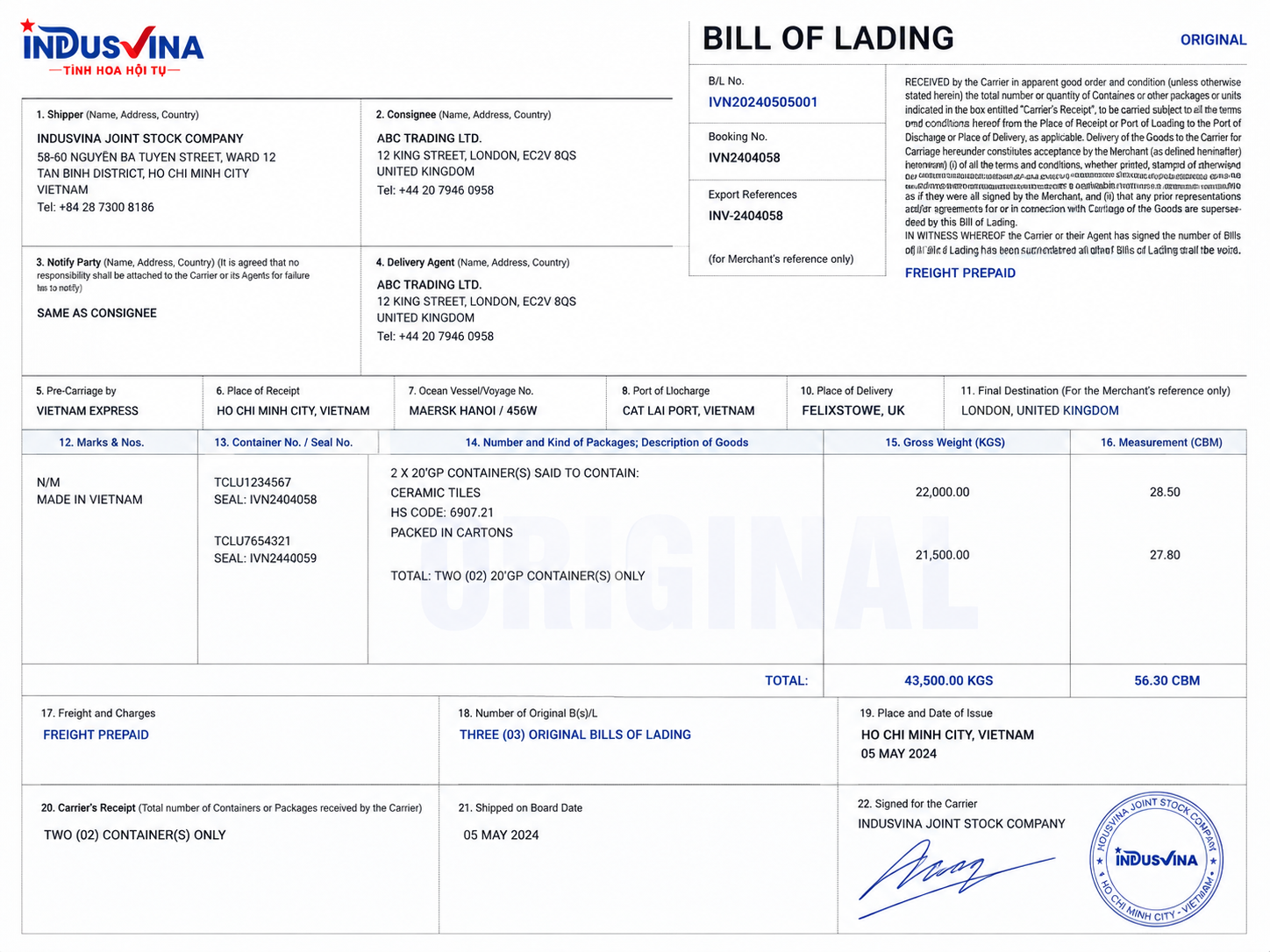
The bill of lading helps define the delivery milestone, shipment route and the basis for calculating the claim period.
4. Incoterms directly affect claims
- FOB: control the evidence that goods have passed the agreed risk-transfer point.
- CIF/CFR: the seller arranges freight, but risk does not always follow cost.
- DAP/DDP: the seller carries deeper responsibility at the import side.
- The claim clause must be consistent with the Incoterms chosen in the contract.
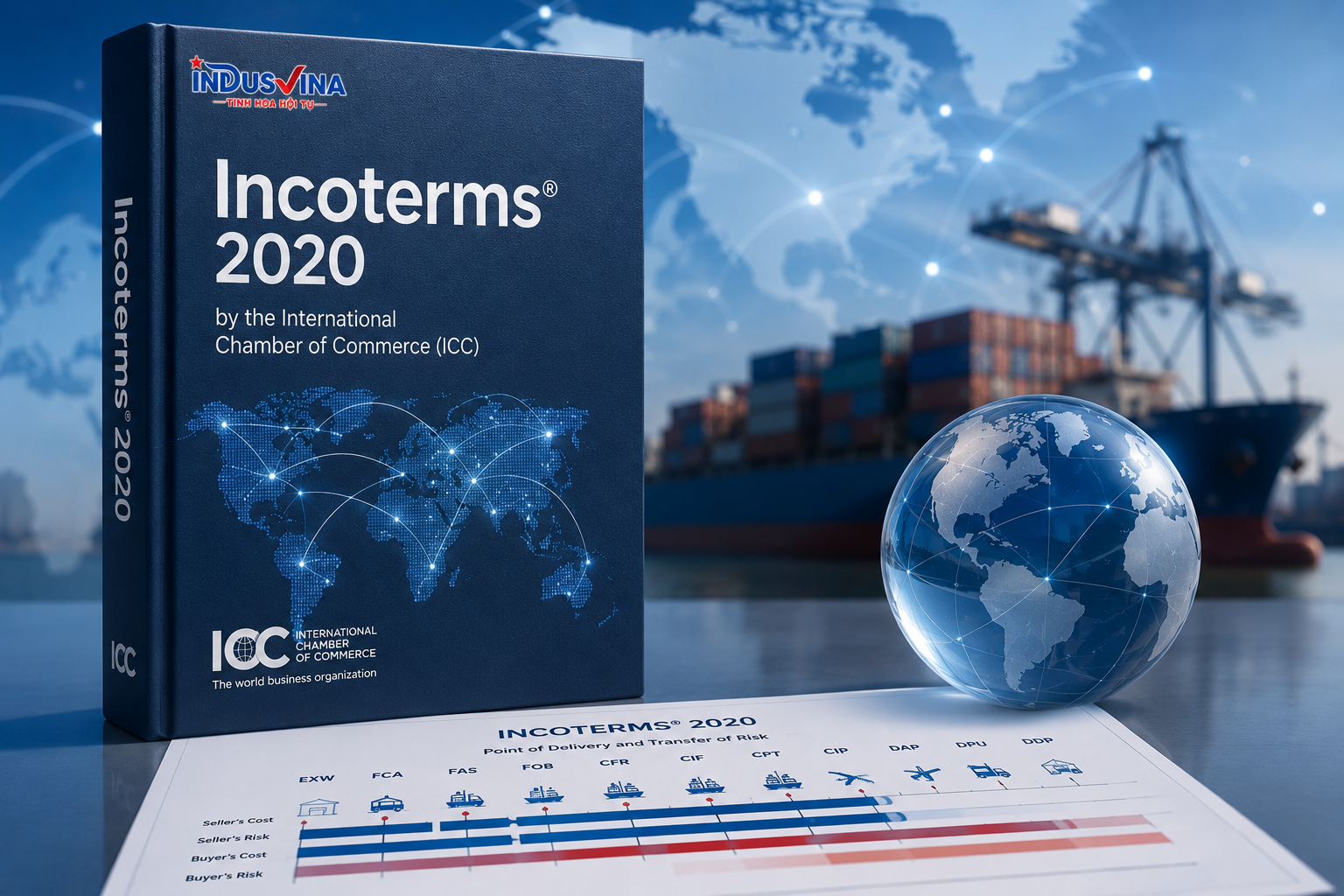
Incoterms are an important basis for determining the risk-transfer point and responsibility when damage or claims arise.
5. 4 points that must be locked in the contract
1. Inspection period
- Apparent condition: 3–7 days.
- Internal quality: 15–30 days.
- Machinery: separate arrival inspection and commissioning test.
2. Claim notice deadline
- Must be made in writing or by official email.
- Include lot number, container number and receiving date.
- Late notice means acceptance of goods.
3. Independent inspection
- Do not accept a one-sided report.
- Use an inspection body agreed by both parties.
- Define the place and method of inspection.
4. Supporting documents
- Photos, videos and written records.
- Inspection report.
- Samples and lab report when required.
6. Checklist before signing an export contract
- Separate quantity, packing and quality claims clearly.
- Set a clear inspection deadline by number of days.
- Set a written claim notice deadline.
- Agree on an independent inspection body.
- Require mandatory supporting documents.
- Include the phrase: late notice shall be deemed as acceptance of goods.
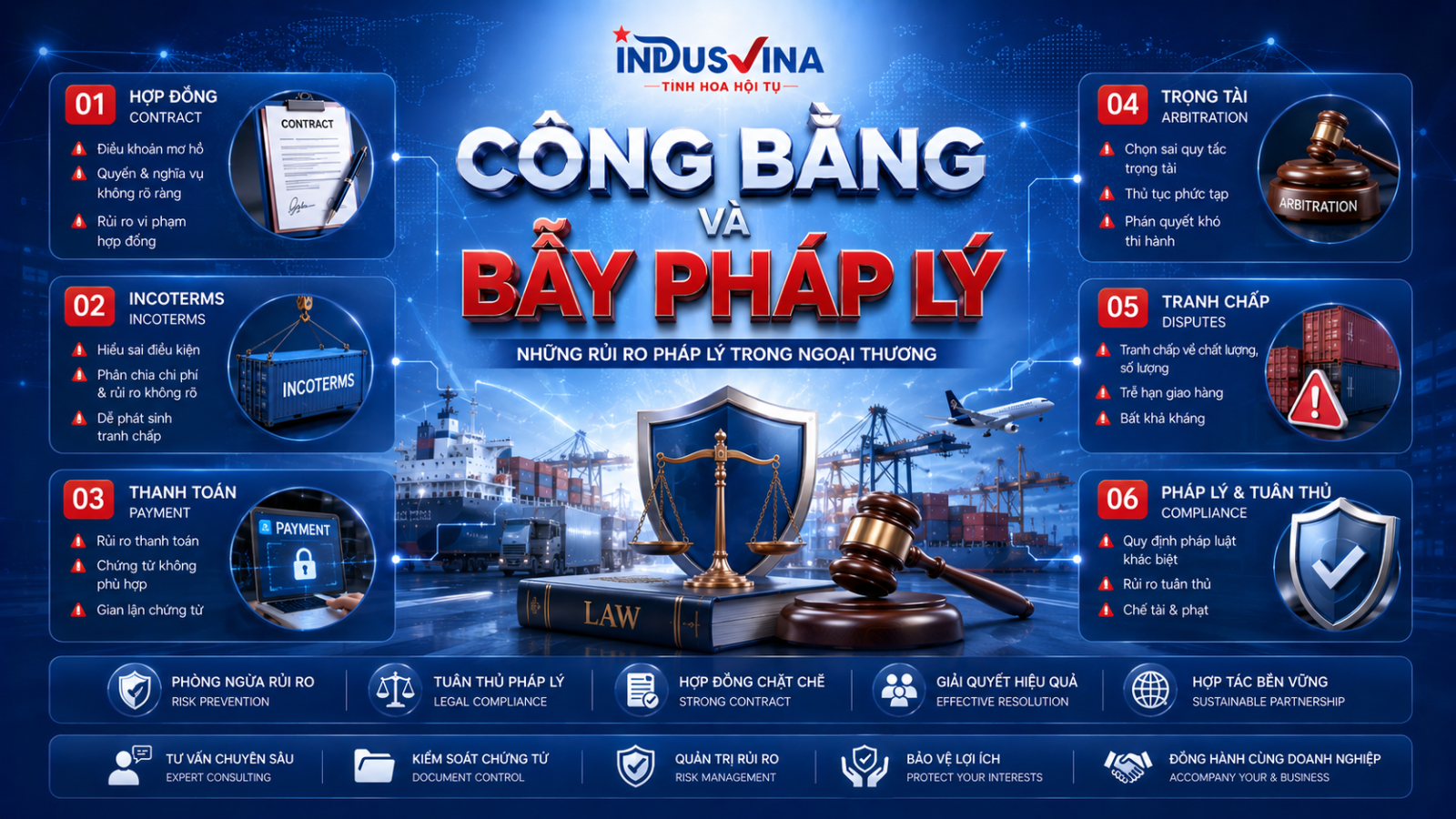
INDUSVINA checklist: 4 points to lock in order to avoid legal traps in Inspection & Claim clauses.
7. Suggested claim periods by product group
| Product group | External inspection | Quality inspection | Key note |
|---|---|---|---|
| Wood, furniture | 3–7 days | 15–30 days | Link to moisture, warehouse and storage conditions. |
| Dry agricultural products | Upon receipt | 7–15 days | Require sampling method and lab report. |
| Seafood, food products | Upon receipt | Very short | Control temperature and cold chain. |
| Machinery | 3–7 days | Based on test run | Separate arrival inspection and commissioning. |
| Garments | 3–7 days | 7–15 days | Define acceptable defect rate. |
8. Short clause-thinking model
- Inspection Period: Buyer shall inspect quantity, packing and apparent condition within 7 days.
- Internal Quality: Internal quality issues shall be notified within 15–30 days depending on the product group.
- Notice of Claim: Any claim must be made in writing with supporting evidence.
- Delay Consequence: If no notice is given within the agreed period, the goods shall be deemed accepted.
Note: Do not copy mechanically. Each product group requires suitable adjustment of deadline, testing standard and inspection body.
Final note
- Fairness is not just in words, but in enforceable clauses.
- An unlimited claim period becomes an unlimited risk.
- Do not offer discounts before evidence is complete.
- Do not ship when the clause is still unclear.
A good contract cannot prevent every dispute, but it helps disputes end at the right time.


