


At the deepest level, every thought, policy and action in human society—however elevated its name—must ultimately serve the full development of people: a healthy body, a peaceful mind and an awakened intellect.
A diplomatic relationship may be upgraded. An agreement may be signed. A joint statement may be issued in solemn language. Yet no ceremony automatically creates jobs, income, knowledge, better products or happier lives.
The value of cooperation does not lie in the number of documents signed, but in the ability to turn commitments into better lives.
- A document is a starting point, not the final outcome.
- Cooperation is sustainable only when its benefits are not confined to one group.
- Responsible trade is the bridge that turns trust into jobs and prosperity.
- Every individual, business and institution helps determine whether a document reaches real life.
- Vietnam should cooperate openly while remaining clear-minded, resilient and principled.
1. Documents do not change the world by themselves
No one spends years in dialogue, negotiation and trust-building merely to add another file to an archive. Behind every document lies the expectation of better conditions for peace, trade, investment, science, education, healthcare, culture and human development.
A signature, however, only confirms a shared intention. The journey from intention to outcome is long: commitments must become policy; policy must be implemented by accountable institutions; businesses must understand and use the opportunity; workers must have the necessary skills; products must meet quality requirements; logistics must function; and customers must receive real value.

If one link fails to move, the flow of value is interrupted. The question is therefore not only what has been signed, but who will act after the signing, what they will do, how they will do it, by when and how results will be measured.

2. Why is comprehensive strategic cooperation needed?
No country can independently create all the knowledge, technology, materials, markets, energy and infrastructure required for development. Nor can any business complete the entire value chain alone—from resources, manufacturing and finance to transport and the final consumer.
Comprehensive strategic partnerships emerge because countries recognize that long-term interests cannot be built through isolated transactions alone. They require a more trusted foundation for addressing major issues, coordinating across sectors and sustaining cooperation across generations.
Not a title
A higher relationship level should not become a badge of ceremonial pride, but a commitment to depth, accountability and coordination.
Not dependence
Deeper cooperation does not mean giving up autonomy. A healthy relationship should make each side stronger, more capable and better able to make its own decisions.
Not an alliance for confrontation
Cooperation should not become a tool for bloc-building, isolation or coercion against other communities.
The capacity to create value together
Real value emerges when both sides learn, work and share responsibility together, and benefit from outcomes on a fair basis.
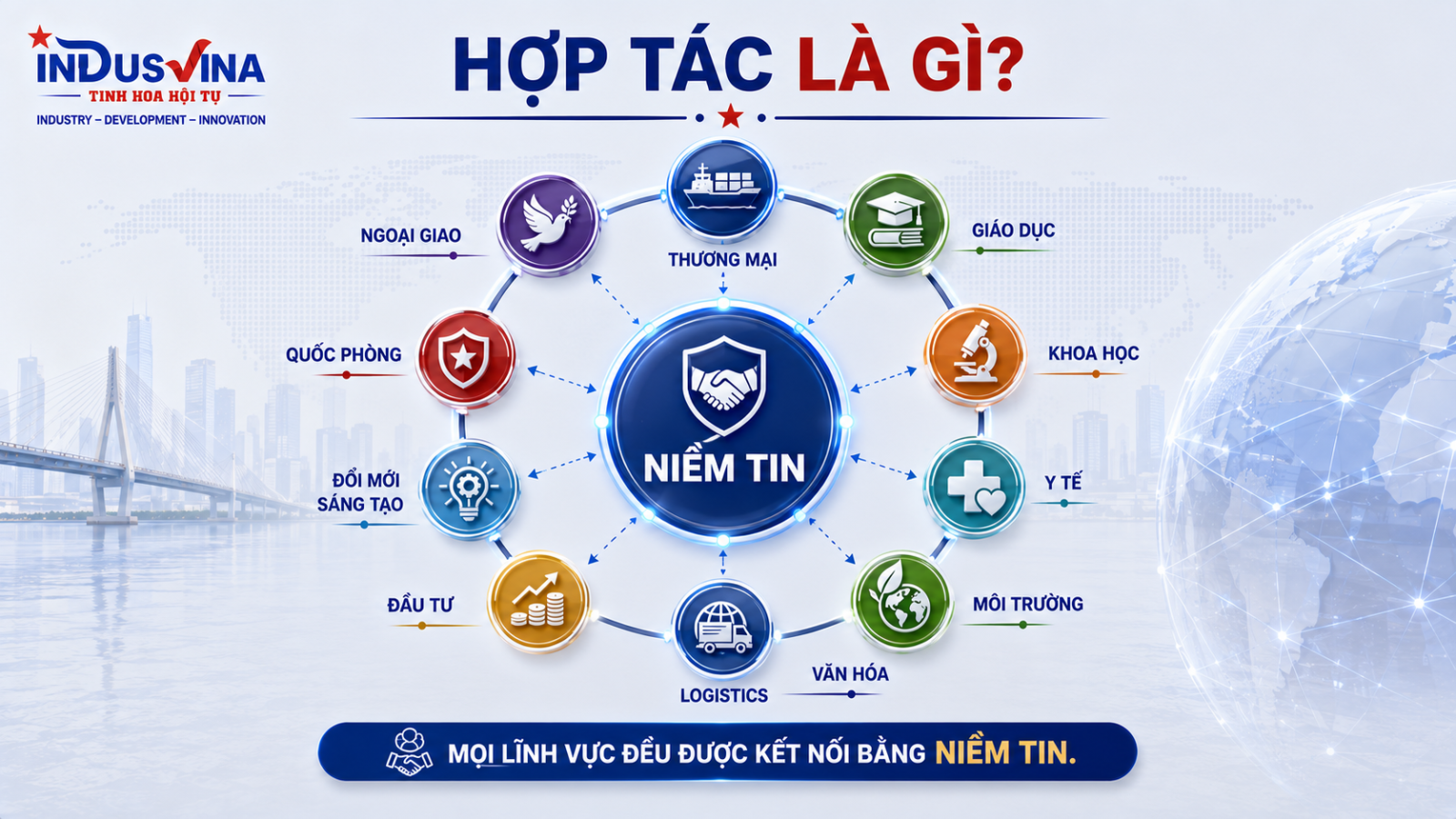
3. People are the ultimate destination of every policy
A policy cannot be considered complete if it is right and beneficial only for one group, one community or one nation while shifting the damage onto others. Benefits may not be distributed equally at every moment, but a sustainable order of cooperation must broaden opportunities for progress and must not build its prosperity on the vulnerability of others.
People are not an abstract concept. They are workers who need safe workplaces; farmers who need fair markets; students who need access to knowledge; engineers who need room to innovate; doctors who need better technology; families who need stable incomes; and consumers who need safe, reliable products.
Body, mind and intellect cannot be separated. Income gained at the expense of health is not complete development. Growth that spreads fear, division and injustice cannot create peace of mind. Knowledge without ethics may strengthen the capacity to destroy faster than the capacity to serve.
A good policy asks not only “what do we gain?” but also “how is this value created, who bears the cost, and are people becoming better as a result?”
4. Trade turns cooperation into tangible value
Culture helps people understand one another. Education expands human capability. Science advances progress. Diplomacy creates space for dialogue. Responsible defence contributes to protecting peace. In economic life, however, trade is one of the most direct bridges for turning understanding and trust into jobs, income, investment and resources for development.
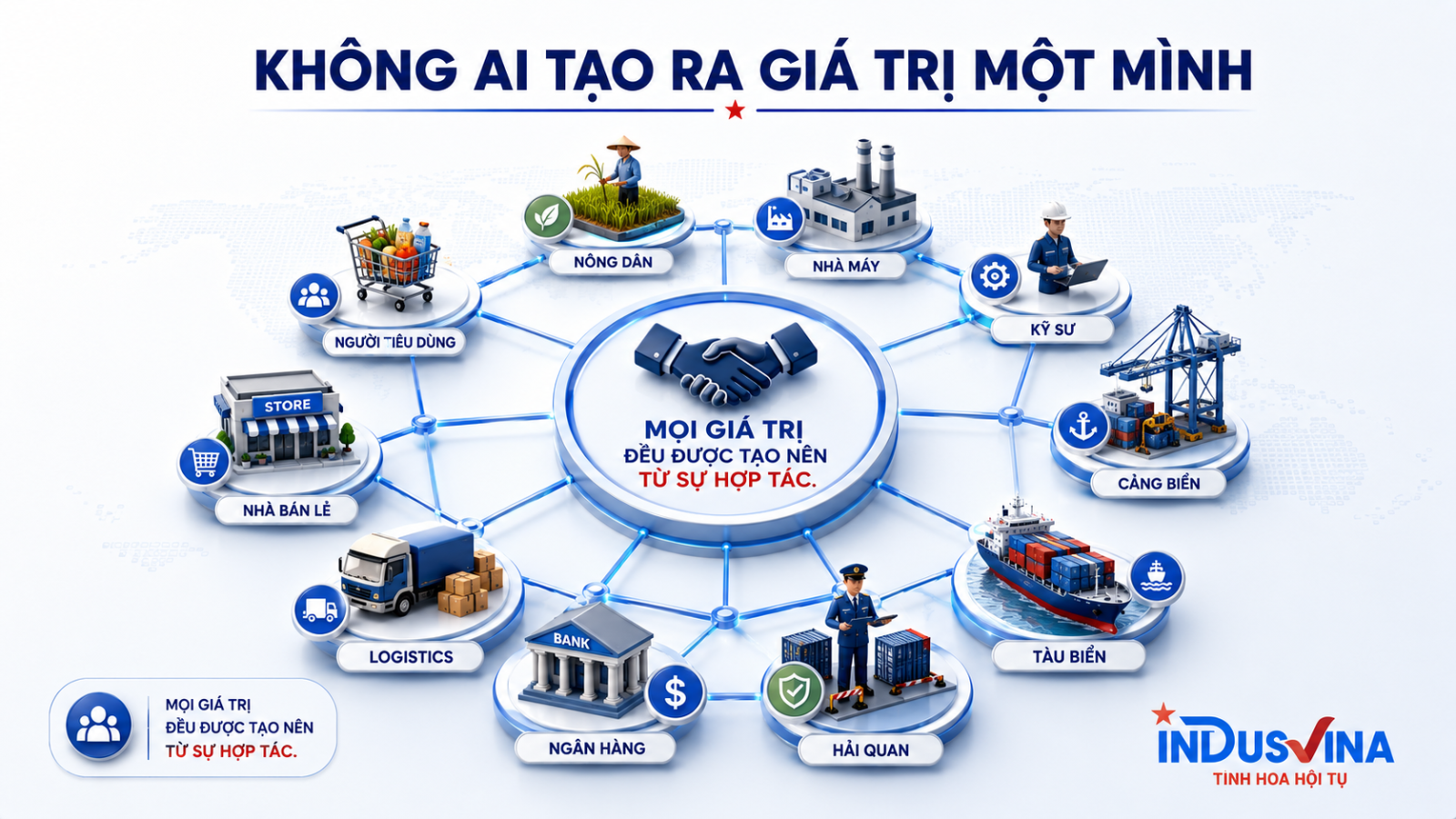
Trade is not simply buying low and selling high. A genuine international transaction is the result of hundreds of people fulfilling their responsibilities: designers, manufacturers, quality inspectors, banks, shipping lines, ports, customs authorities, insurers, logistics providers, distributors and customers.
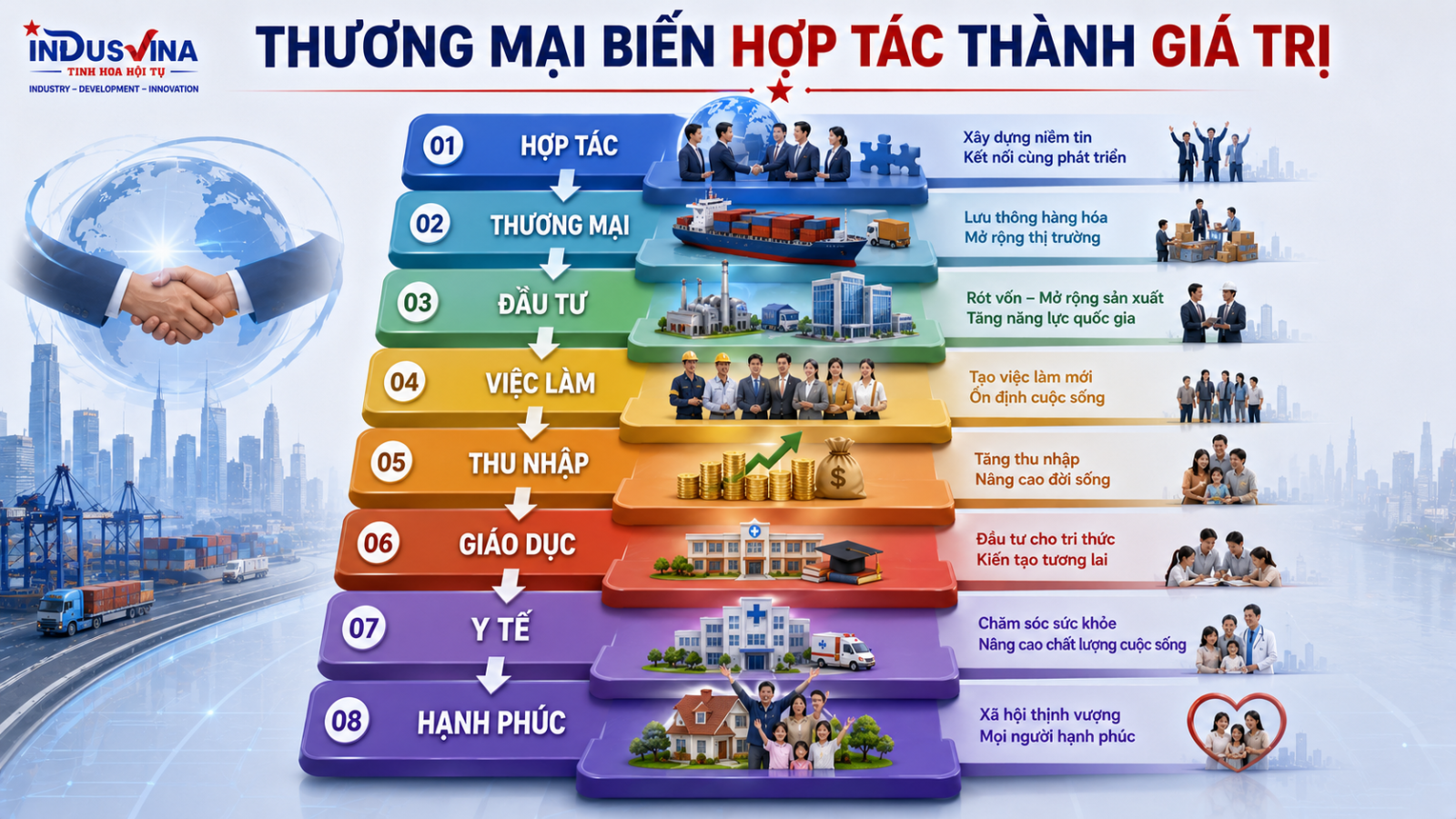
Trade deserves respect only when wealth is created through productivity, innovation, discipline, honesty and responsibility toward people. If profit depends on deception, exploitation, environmental damage or shifting risk to the weaker party, it is not the prosperity that strategic cooperation should pursue.
From market opening to the capacity to use opportunity
An agreement may reduce tariffs and open markets, but it cannot build quality on behalf of businesses, acquire skills on behalf of workers, improve procedures on behalf of public authorities or keep promises on behalf of each individual.
5. Value is created through small actions every day
We may establish more partnerships, cooperation frameworks and action programmes. Yet if everyday life continues to tolerate careless work, hidden mistakes, missed deadlines, weak quality and shifted responsibility, those documents will struggle to travel beyond the page.
A country is judged not only by statements from national institutions, but also by how its businesses keep their word, how its workers complete their tasks, how a shipment is quality-controlled, how a complaint is resolved and how shortcomings are handled when discovered.
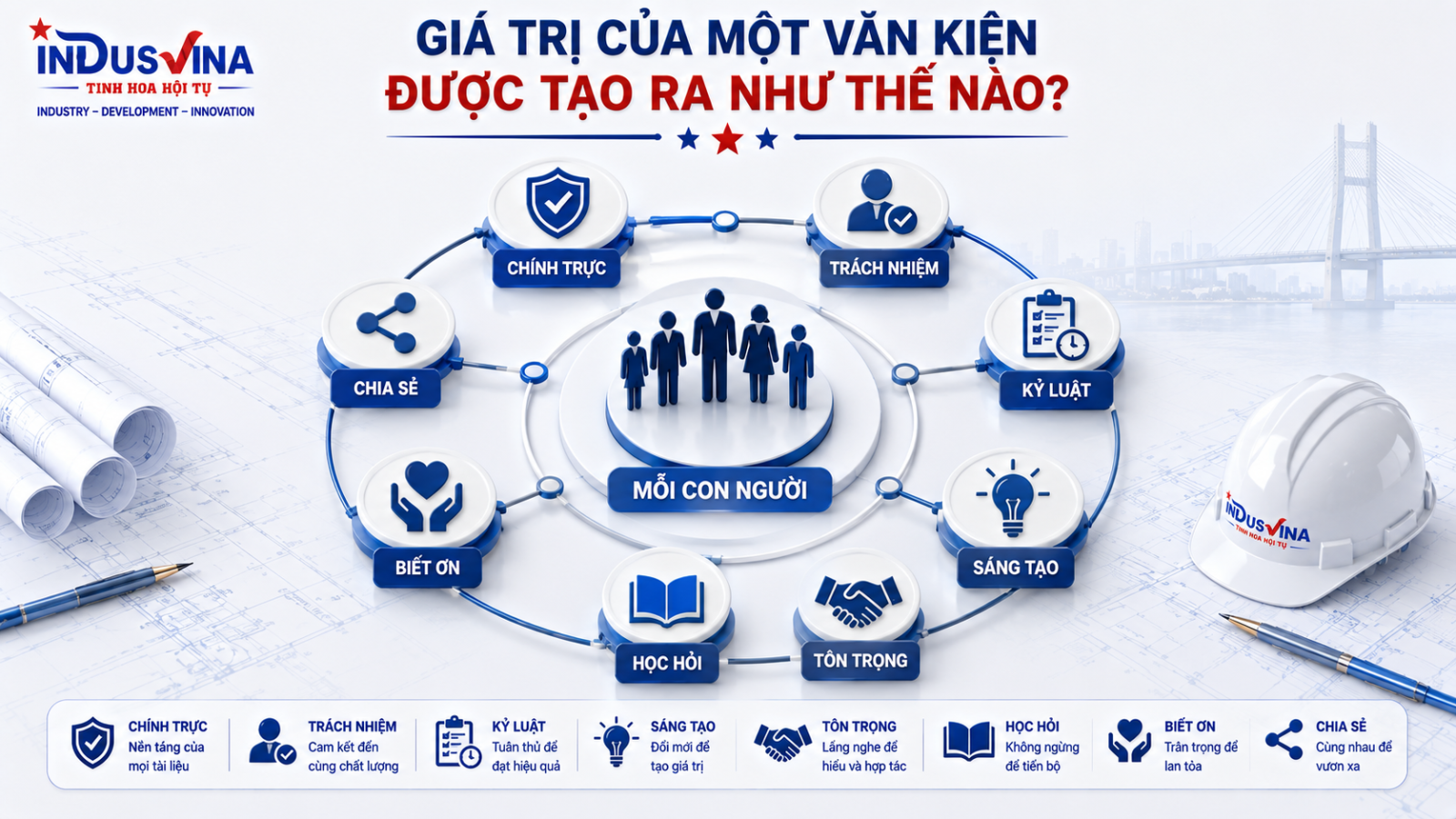
6. No one creates value alone
Every generation inherits achievements it did not create by itself: peace preserved, roads and ports built, trade rules established, knowledge passed down, technologies invented and global logistics routes sustained through countless disruptions.
We are grateful to earlier generations who built and protected the nation. We value workers, customers, partners, suppliers, scientific communities, financial systems, customs authorities, ports, shipping lines and the entire network that enables a product to travel from where it is made to the people who need it.
Gratitude is not expressed through words alone. It must appear in the quality of every product, the clarity of every document, the punctuality of every order and the responsible handling of every problem.
7. Cooperating with the world through clear judgment, resilience and integrity
Openness does not mean naivety. Respect does not mean dependence. Cooperation does not mean abandoning a nation's legitimate interests. Nor does protecting one's interests justify building blocs to isolate, bully or coerce other communities.
Vietnam should cooperate with all countries of goodwill on the basis of independence, mutual respect, international law, mutual benefit and shared responsibility for the consequences of collective actions. Every relationship should combine trust with verification, aspiration with risk management, and goodwill with preparedness for differences.

A better world cannot be built by allowing one group to win absolutely while others are driven into despair. Lasting peace requires space for countries to develop, respect for communities and dialogue—not coercion—as the means of handling differences.
8. INDUSVINA's perspective: responsibility begins in every task
INDUSVINA does not regard international cooperation as a distant concept. It is present in every request for quotation, every drawing, every technical standard, every shipment, every customer conversation and every commitment that must be fulfilled.
We seek to become a reliable link in the value chain, connecting Vietnam's manufacturing, construction, maintenance and supply capabilities with domestic and international demand. The value of that link is not measured by how large we claim to be, but by whether we perform our part correctly.
For INDUSVINA, integration begins with specific principles: provide honest information; respect standards; do not conceal limitations; manage quality and documentation responsibly; keep commitments to customers; learn from mistakes; and remember that behind every contract are jobs, incomes, reputations and the lives of many people.

9. Conclusion: documents have value only when people act together
A comprehensive strategic partnership is an important upgrade in the journey of integration. Yet the higher the relationship level, the greater the responsibility for implementation. National institutions cannot carry that burden alone. Local authorities, businesses, schools, research institutes, workers and individual citizens all help bring cooperation into daily life.
Every better product, more transparent process, more respected worker, more responsibly served customer and more seriously corrected mistake is a small step that gives a document real value.
The greatest value of any international relationship lies not in the number of documents signed, but in the lives improved by the value that cooperation creates.
Continue reading on integration and trade
FAQ – Frequently asked questions
What does a comprehensive strategic partnership mean?
It is a framework of broad, high-trust cooperation that often covers diplomacy, trade, investment, science, education, culture, security and regional or global issues. Its real value depends on action programmes and the implementation capacity of the parties.
Why might a document fail to create real value?
Because commitments do not automatically become policies, procedures, projects, orders or jobs. Implementation requires responsible institutions, resources, deadlines, measurement standards and participation by businesses and citizens.
What role do businesses play in international cooperation?
Businesses turn policy opportunities into products, services, investment, jobs and income. Their quality, credibility, management capability and responsibility determine much of the real value of integration.
Why is trade considered a bridge for value creation?
Trade connects demand with productive capacity and advances specialization, investment, technology, logistics and employment. It is sustainable only when it respects law, standards, ethics and responsibility toward people and the environment.
Does open cooperation reduce autonomy?
Not necessarily. Responsible cooperation should strengthen capability, diversify relationships and increase each party's ability to make independent decisions. Clear judgment, transparent interests, risk management and the avoidance of asymmetric dependence are essential.
Connect through capability – cooperate through responsibility
INDUSVINA is ready to connect MRO, M&E, construction, technical supply and export needs with honesty, clarity and a commitment to long-term value for customers, partners and communities.
This article presents INDUSVINA's management perspective and philosophy of cooperation. It is not intended as a legal interpretation of any specific diplomatic document or agreement.


