


Method Statement for RC Pile Pressing
Process, standards, acceptance and quality control for pile pressing works
RC pile pressing is not simply pushing piles into the ground. It is a technical process that must be controlled through design documents, geotechnical investigation, pile pressing method statement, trial pile pressing, Hold Points, termination criteria, acceptance and safety management.

1. What is RC pile pressing?
Reinforced concrete pile pressing is a method that uses hydraulic pressure to drive precast reinforced concrete piles into the ground according to the depth, pressing force and technical criteria specified by the design.
This method is commonly used for civil buildings, industrial buildings, infrastructure works, factories, warehouses and projects that require less vibration compared with pile driving.
- Transfers structural loads to soil layers with better bearing capacity.
- Reduces vibration and noise compared with driven piles.
- Makes it easier to record pressing force, depth, penetration speed and construction logs.
- Suitable for many projects in residential areas or sites with adjacent structures.
2. Why must the pile pressing method be strictly controlled?
Pile pressing is a below-ground work item. Once executed incorrectly, inspection, repair and consequence handling become very difficult. A small error during pile pressing can cause settlement, structural cracking, reduced bearing capacity or acceptance disputes.
Technical risks
- Pile position deviation.
- Pile inclination.
- Pile cracking or breaking.
- Unqualified pile joint.
- Failure to meet required pressing force or design depth.
Management risks
- No clear pile pressing method statement.
- No trial pile pressing before mass works.
- No Hold Point control.
- Incomplete pile pressing logs.
- Acceptance dossier lacking technical evidence.
3. Mandatory documents and conditions before pile pressing
Before construction, the contractor, supervision consultant and owner must agree on all technical documents. This is a condition for starting the work item, not a formality.
Design documents
- Foundation and pile layout drawings.
- RC pile specifications.
- Design bearing capacity.
- Elevation, depth and pile axis coordinates.
Geotechnical investigation
- Soil stratigraphy profile.
- Soil mechanical properties.
- Bearing soil layer.
- Warning of obstructions or abnormal soil layers.
Pile pressing method statement
- Construction equipment.
- Trial pile pressing plan.
- Termination criteria.
- Acceptance process and abnormal condition handling.
4. Pile pressing machine and key components to control
The pile pressing machine must be suitable for the design load, site conditions, counterweight or anchoring method, verticality control capability and pressing force measuring system.
- The pressing frame must be stable, not deformed and free from overturning risk.
- Hydraulic cylinders, pressure gauges and force measuring systems must be checked/calibrated.
- Counterweights or anchors must follow the approved method and must not be changed arbitrarily.
- The machine position must ensure safety for workers, equipment and nearby structures.

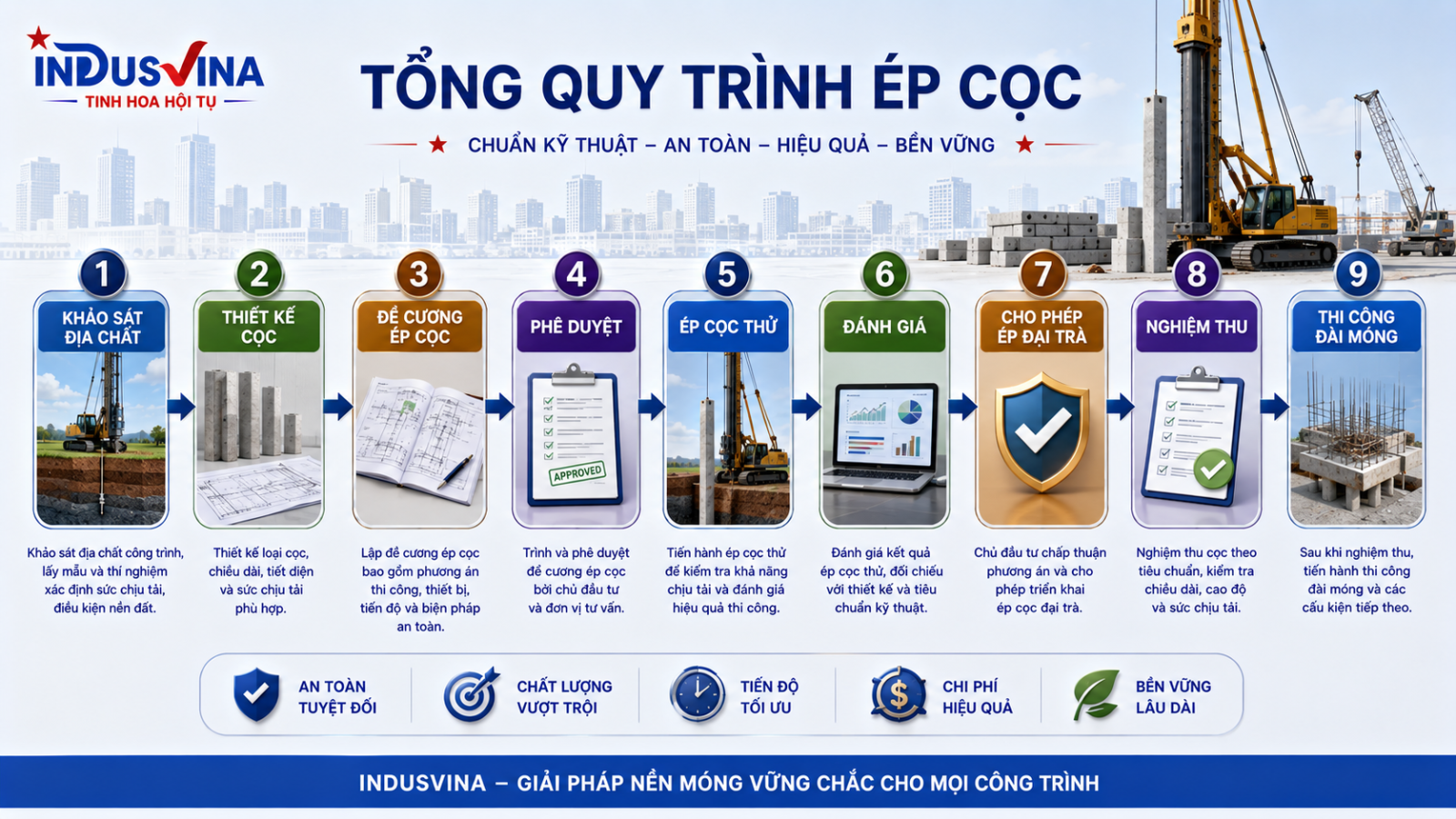
5. RC pile pressing process according to INDUSVINA standards
Step 1: Preparation and method statement approval
Review design, geotechnical data, site conditions, equipment, safety method, termination criteria and submit the pile pressing method statement for approval.
Step 2: Pile positioning
Survey and mark pile center, elevation, grid lines and control benchmarks. Pile position must be accepted before placing the pile for pressing.
Step 3: Incoming pile inspection
Check appearance, dimensions, concrete grade, pile age, factory certificates, pile head, steel plates and identification code of each pile segment.
Step 4: Trial pile pressing
Carry out trial pile pressing at the exact location, quantity and requirements stated in the method statement. Record pressing force, depth, penetration speed and abnormal conditions.
Step 5: Approval for mass pile pressing
Mass pile pressing is allowed only after the trial pile meets requirements and written approval is issued by the supervision consultant/owner.
Step 6: Mass pressing and acceptance
Execute in sequence, control Hold Points, record each pile log, inspect joints, verify termination criteria and prepare as-built pile location records.
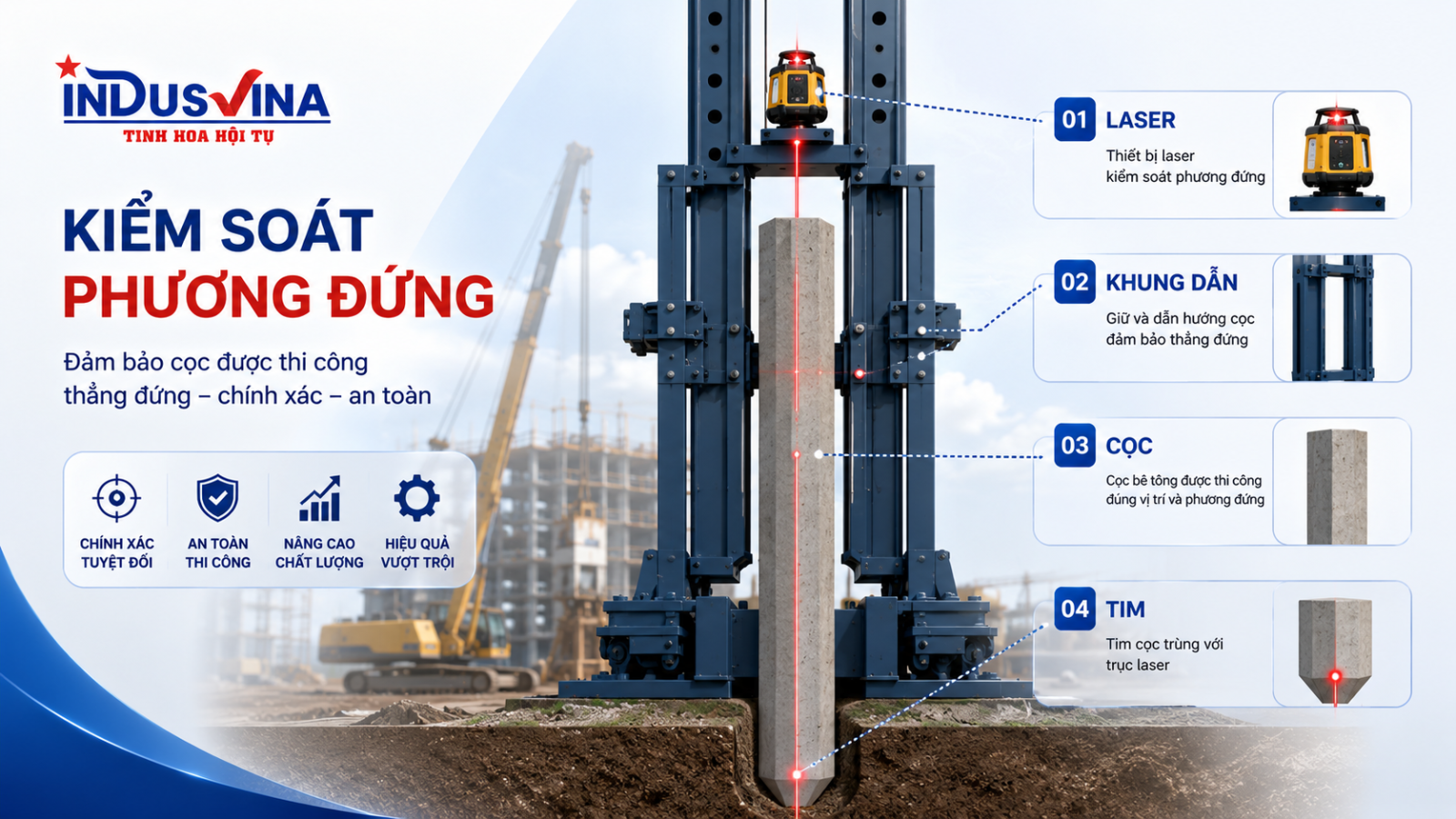
6. Verticality and pile position control
Verticality control is one of the critical points in pile pressing works. A deviated or inclined pile can affect bearing capacity, pile cap arrangement and acceptance.
- Check pile center before erecting the pile.
- Align the guide frame and pile body in two perpendicular directions.
- Press slowly during the initial stage to keep the pile direction stable.
- Stop immediately when pile inclination, position deviation or abnormal force increase is detected.
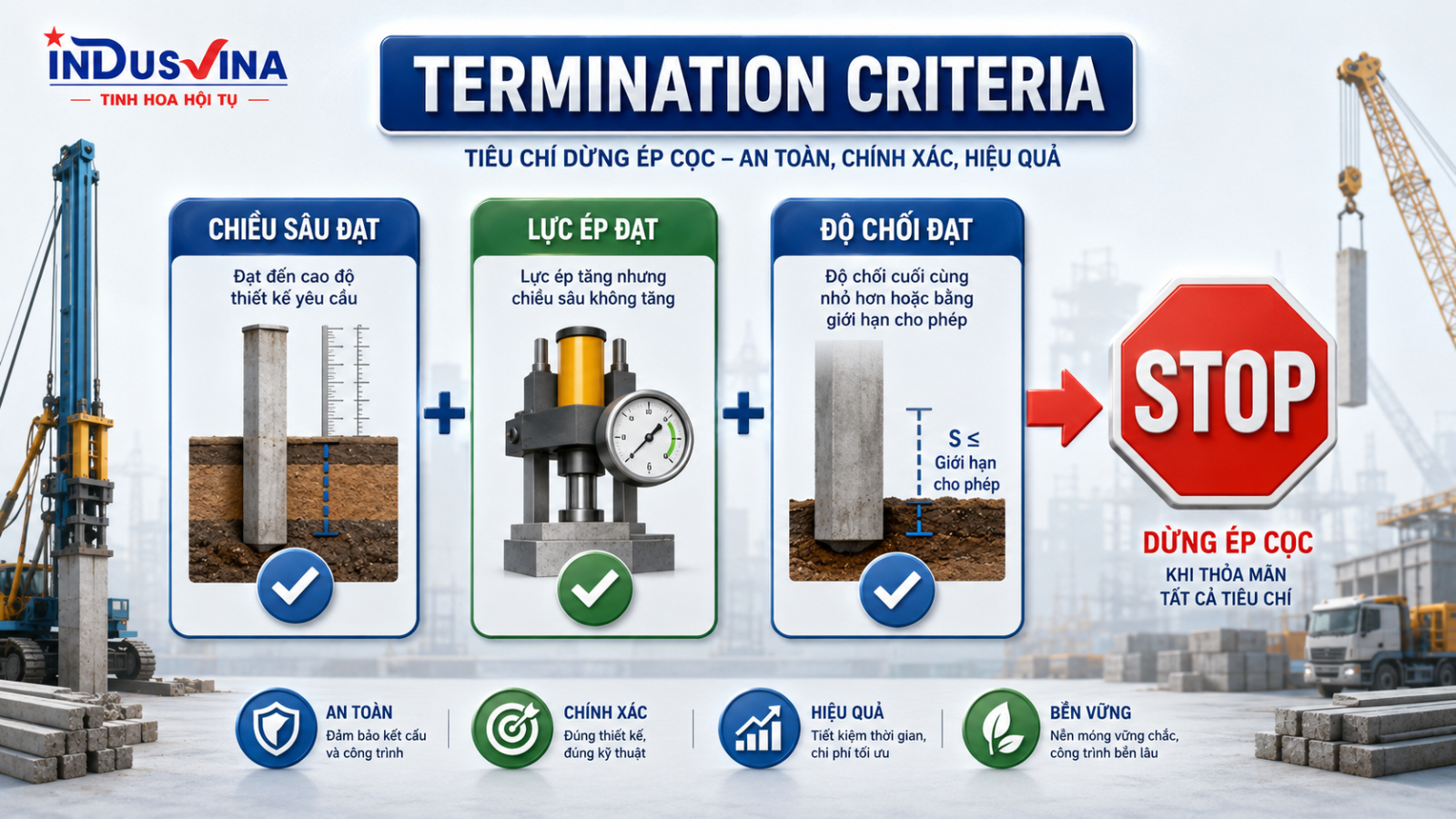
7. Pile pressing termination criteria
Pile pressing termination criteria must be defined in the design and the pile pressing method statement. Pressing must not be stopped by feeling or based only on site experience.
| Criterion | Control purpose | Site note |
|---|---|---|
| Design depth | Ensures that the pile reaches the soil zone specified by the design. | Do not stop early without technical instruction. |
| Final pressing force | Reflects soil resistance at the final pressing stage. | Pressing force must be read from checked/calibrated equipment. |
| Refusal / penetration speed | Assesses the pile’s ability to continue penetrating. | Must be fully recorded in the pile pressing log. |
| Technical abnormality | Indicates obstruction, pile breakage, pile inclination or unexpected soil layer. | Stop, evaluate and handle according to the approved method. |
8. Hold Points in pile pressing works
A Hold Point is a mandatory stop point for inspection, confirmation and acceptance before moving to the next step. It is an important quality management tool in foundation construction.
| Hold Point | Inspection content | Condition to proceed |
|---|---|---|
| HP0 | Pile pressing method statement, equipment, site condition, safety. | Approved and ready for construction. |
| HP1 | Pile center, control marks, elevation. | Confirmed by survey and supervision consultant. |
| HP2 | Incoming pile, pile documents, appearance. | Only accepted piles are allowed for pressing. |
| HP3 | Trial pile pressing. | Trial pile accepted and mass pressing approved. |
| HP4 | Pile joint. | Joint accepted before continuing pressing. |
| HP5 | Termination criteria. | Required depth/pressing force/refusal achieved according to the method statement. |
9. Common mistakes in pile pressing works
- No clear pile pressing method statement, leading to disputes during acceptance.
- No trial pile pressing, or trial pressing without proper data evaluation.
- No pressure gauge/pressing force check, causing inaccurate acceptance data.
- Incorrect pile positioning, causing pile deviation and difficulty in pile cap construction.
- Pressing too fast at the initial stage, making the pile prone to inclination or displacement.
- Unqualified welding joint, with no visual and dimensional inspection.
- Continuing pressing despite obstruction, causing pile cracking, breaking or pile head damage.
- Incomplete pile pressing log, lacking evidence for acceptance and payment.
10. Pile pressing acceptance dossier checklist
Pre-construction documents
- Foundation and pile design drawings.
- Geotechnical investigation report.
- Approved pile pressing method statement.
- Construction method and HSE plan.
- Equipment inspection/calibration records.
During and after construction documents
- Pile position acceptance record.
- Incoming pile inspection sheet.
- Pressing log for each pile.
- Pile joint acceptance record.
- Trial pile pressing record and mass pressing approval.
- As-built pile location drawing.
- Completion acceptance record for pile works.
11. Occupational safety during pile pressing works
- Barricade dangerous zones around the pressing machine, crane and counterweight area.
- Do not stand under lifted loads or near hazardous areas during pile erection.
- Check machine support ground, counterweights, anchors and overturning resistance.
- Inspect wire ropes, hooks, slings, safety pins and crane signals.
- Control hydraulic oil leakage, temporary power, obstructions and site access routes.
- Stop work when weather, site conditions or equipment do not ensure safety.
12. INDUSVINA’s implementation capability
INDUSVINA has grown from practical experience in industry, construction, MRO and technical supply. For foundation and infrastructure works, we focus on risk control from the beginning: clear documents, clear process, clear responsibilities and clear acceptance criteria.
- Established in 2013.
- Experience in factory maintenance, M&E, construction and technical supply.
- Implementation orientation based on responsibility, quality, safety and long-term value.
- Connecting construction capability, quality management and post-handover operation.
13. Conclusion
- RC pile pressing is a foundation work item that requires strict technical discipline.
- The pile pressing method statement is an important basis for construction, inspection and acceptance.
- Trial pile pressing is a mandatory step before mass pressing.
- Hold Points help control quality at each step.
- Pile pressing logs are important technical evidence for acceptance and issue handling.
FAQ – Frequently asked questions about RC pile pressing method statement
1. When should RC pile pressing be stopped?
It should be stopped according to the design and pile pressing method statement criteria: depth, final pressing force, refusal or other approved technical conditions.
2. Is trial pile pressing mandatory?
For projects requiring serious quality control, trial pile pressing is a very important step to verify geotechnical conditions, pressing force and constructability before mass pressing.
3. What should be done when a pile is inclined?
Construction must be stopped, the cause checked, the deviation evaluated and handling carried out according to approved technical instruction. Pressing should not continue before the risk is clearly identified.
4. When is pre-boring required before pile pressing?
When hard soil layers, obstructions, complex ground conditions or abnormal force increase are encountered, pre-boring may be considered but must be approved by the designer, supervision consultant and owner.
5. What documents are required for pile pressing acceptance?
The dossier should include the pile pressing method statement, pressing logs, pile position acceptance record, incoming pile documents, joint acceptance record, trial pile pressing result, mass pressing approval, as-built drawing and completion acceptance record.
Connect with INDUSVINA
INDUSVINA is ready to accompany Customers and Partners in construction, infrastructure, MEP, MRO maintenance, technical supply and export needs.
0979 823 639
info@indusvina.com
www.indusvina.com
Ho Chi Minh City, Vietnam


