


Practical LC Surgery
One wrong word in the documents can cost a company a percentage of the contract value. This article helps businesses read an L/C in the way that “reading means seeing the traps”, in order to protect cash flow, reputation and control in export transactions.
An L/C is not dangerous because it is complex. It is dangerous because of the principle of strict compliance.
Banks do not “sympathize” with documentary discrepancies. Once the goods have been shipped and the documents do not match, the seller is often pushed into accepting a price reduction so the buyer will “accept the documents”.
1. Opening – A Practical Story
A Vietnamese company exported steel to South Asia.
The buyer opened an irrevocable L/C. It sounded very safe.
The company produced on schedule. The goods were loaded on board. The document set was submitted to the bank.
5 days later… the bank reported: Discrepancy.
The reason?
The L/C stated: “Hot rolled steel plate grade SS400”.
The Invoice stated: “Hot rolled steel plates SS400”.
Only one letter “s” was different. The bank refused payment.
The buyer requested a price reduction to “accept the document set”.
3% of the contract value was lost because of one letter.
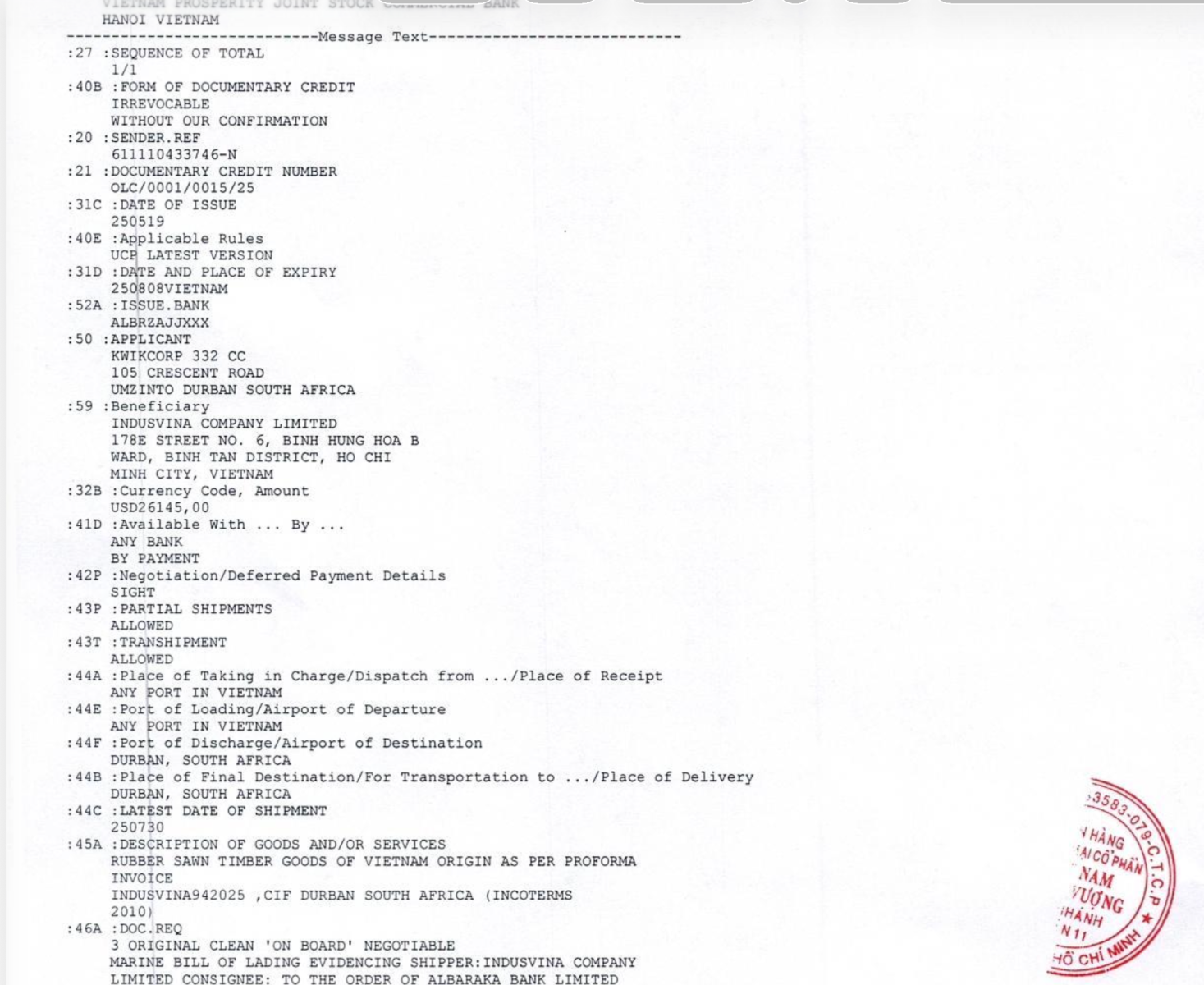
An L/C is not dangerous because it is complex. It is dangerous because of the principle of strict compliance.
2. What is an L/C?
Letter of Credit is a payment undertaking issued by the issuing bank on behalf of the buyer, provided that the seller presents a compliant set of documents.
An L/C is governed by:
- UCP 600 – Uniform Customs and Practice for Documentary Credits.
- Relevant banking and foreign exchange regulations.
The bank checks documents only.
The bank does not check the goods.
Documents must comply strictly.
One wrong detail may lead to refusal of payment.
3. Dissecting the Key Fields in an L/C
3.1. Applicant & Beneficiary
- Applicant: Buyer.
- Beneficiary: Seller.
Incorrect names, addresses or missing characters may all lead to rejection. The name and address must match 100% with the Invoice, B/L and C/O.
3.2. Amount & Tolerance
The L/C amount and allowed tolerance must be checked carefully. If there is no tolerance, under-shipment or over-shipment may both be rejected.
3.3. Latest Shipment Date
This is a critical deadline. One day late in shipment = the L/C may become unusable. There is no such thing as “sympathy”.
3.4. Expiry Date & Place of Expiry
The seller must know when the L/C expires and where documents must be presented. If documents are presented late, the bank has the right to refuse them.
3.5. Description of Goods
This is the most common trap. The description in the Invoice must match the L/C: do not add, remove or reinterpret the wording.
3.6. Required Documents
- Full set of Clean on Board B/L.
- Commercial Invoice – 3 originals.
- Packing List.
- Insurance Policy.
- Inspection Certificate issued by XYZ.
Missing just one required document may create a discrepancy.
3.7. Presentation Period
Common wording: Within 21 days after shipment date. If the B/L date is the 1st and documents are presented on the 23rd, the presentation is late.
3.8. Partial Shipment / Transshipment
The seller must check whether partial shipment and transshipment are allowed. If the L/C prohibits transshipment while the shipping route requires it, the seller may be put in a difficult position.
4. A Trade Risk Management Perspective
Common mistakes
- Not checking the L/C immediately upon receipt.
- Not requesting an amendment when there are unfavorable terms.
- Not cross-checking the L/C before issuing documents.
- Shipping the goods first and only later discovering terms that are difficult to comply with.
Common traps
- The buyer requires an “Inspection Certificate by Buyer’s Representative”.
- The L/C requires documents issued by an authority in the importing country.
- The L/C requires special remarks on the bill of lading.
L/C checking checklist before shipment
- Check the shipment date.
- Check the expiry date.
- Check the goods description.
- Check the required document list.
- Check the insurance terms.
- Check the special conditions.
Only start production when everything is clear.
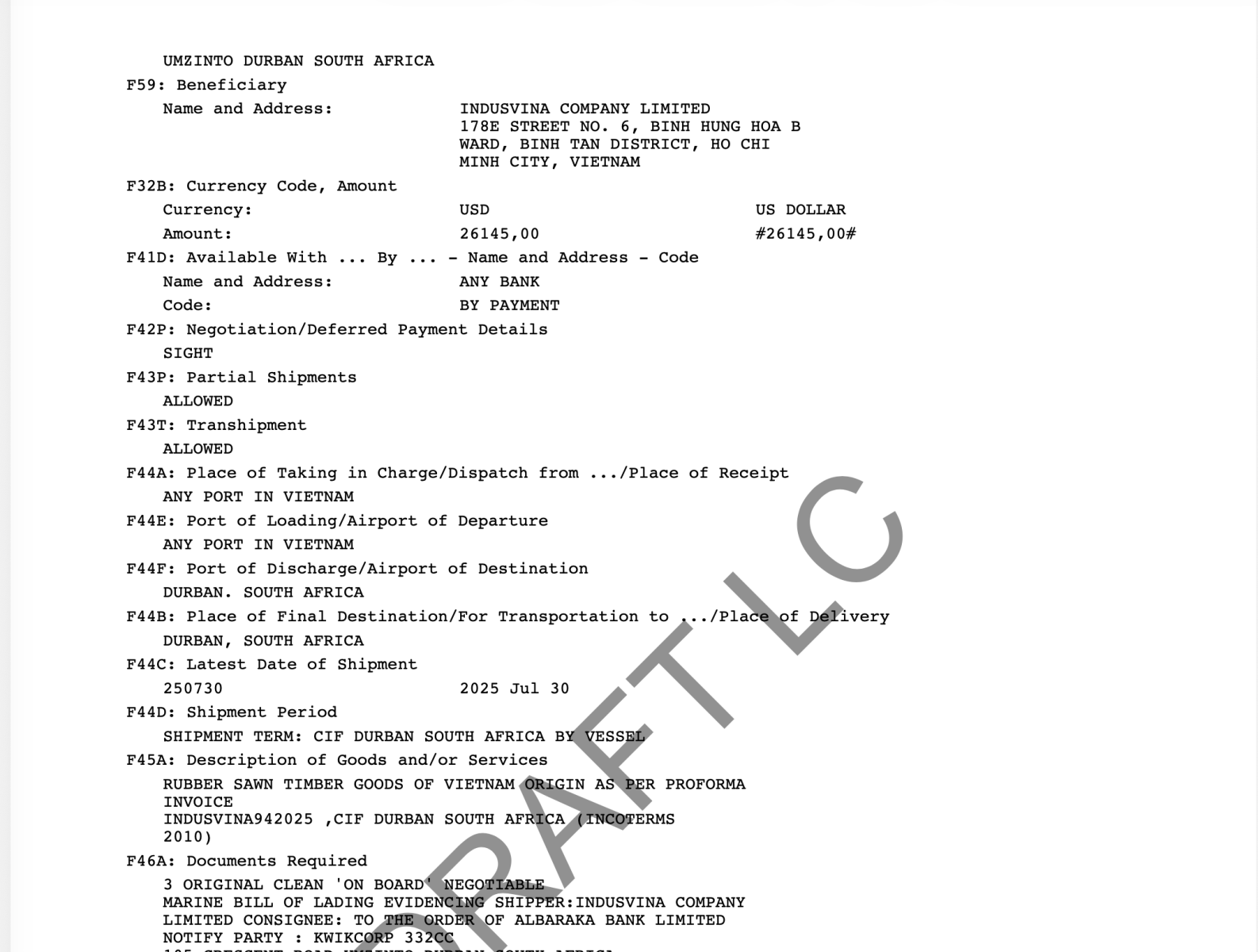
5. 5 Fatal Mistakes When Handling an L/C
- Not reading the amendment carefully: The L/C has been amended, but the document set is still prepared according to the old version.
- Starting production before reviewing the L/C: By the time unfavorable terms are discovered, it may be too late.
- Goods description different from the Invoice: Even singular/plural wording, symbols, grade or standards may be flagged.
- Presenting documents after the deadline: The goods may be shipped on time, but late document presentation may still be rejected.
- Believing the bank will be flexible: Banks work based on documents, not commercial sympathy.
Final Thoughts
An L/C is not a paper guarantee that payment will certainly be received. An L/C is a set of rules. Those who understand the rules can protect their cash flow. Those who underestimate the rules may pay the price through profit, reputation and loss of control in the transaction.
Whether you are an export entrepreneur, an international importer or someone entering global trade, remember:
- Read the L/C carefully before production, shipment or document preparation.
- Check every small detail before issuing the Invoice, Packing List, B/L and related documents.
- Do not ship when L/C terms are still unclear, unfavorable or difficult to perform.
- Do not trade caution for speed.
- Money is not usually lost when goods are loaded on board; money is often lost when documents do not comply.
In international trade, experience helps a business find opportunities. But documentary discipline is what helps a business keep its profit.
Reading one line incorrectly may cost a contract.
Reading one line correctly may protect an entire business.

FAQ – Frequently Asked Questions
What is an L/C?
An L/C is a Letter of Credit, meaning a payment undertaking issued by the issuing bank on behalf of the buyer if the seller presents a compliant set of documents.
Why can an L/C still cause financial loss?
Because the bank checks documents only, not the goods. Incorrect documents or documents that do not match the L/C terms may lead to refusal of payment.
What does Strict Compliance mean?
It is the principle of strict documentary compliance. Documents must match the L/C without adding, removing or incorrectly interpreting important details.
Which fields in an L/C should be checked most carefully?
The goods description, shipment date, expiry date, place of presentation, required document list, presentation period and special conditions should all be checked carefully.
What should a seller do when an L/C contains unfavorable terms?
The seller should not rush into production or shipment. The buyer should be requested to amend the L/C before execution.
Sharing Knowledge – Creating Value
INDUSVINA sincerely thanks you for taking the time to read this article. If the content is valuable, please share it with your team and cite indusvina.com when reusing it.


