


Vietnam in the Era of Global Trade
Vietnam stands at the intersection of several major global shifts: supply chain restructuring, expanding trade, the green transition, digital technology, and the search for reliable manufacturing hubs. Its strategic location, long coastline, extensive trade agreement network, political stability, agricultural and aquaculture potential, and growing manufacturing capacity are creating a rare opportunity for Vietnam to advance within global value chains.
1. Global trade evolves according to a recurring pattern
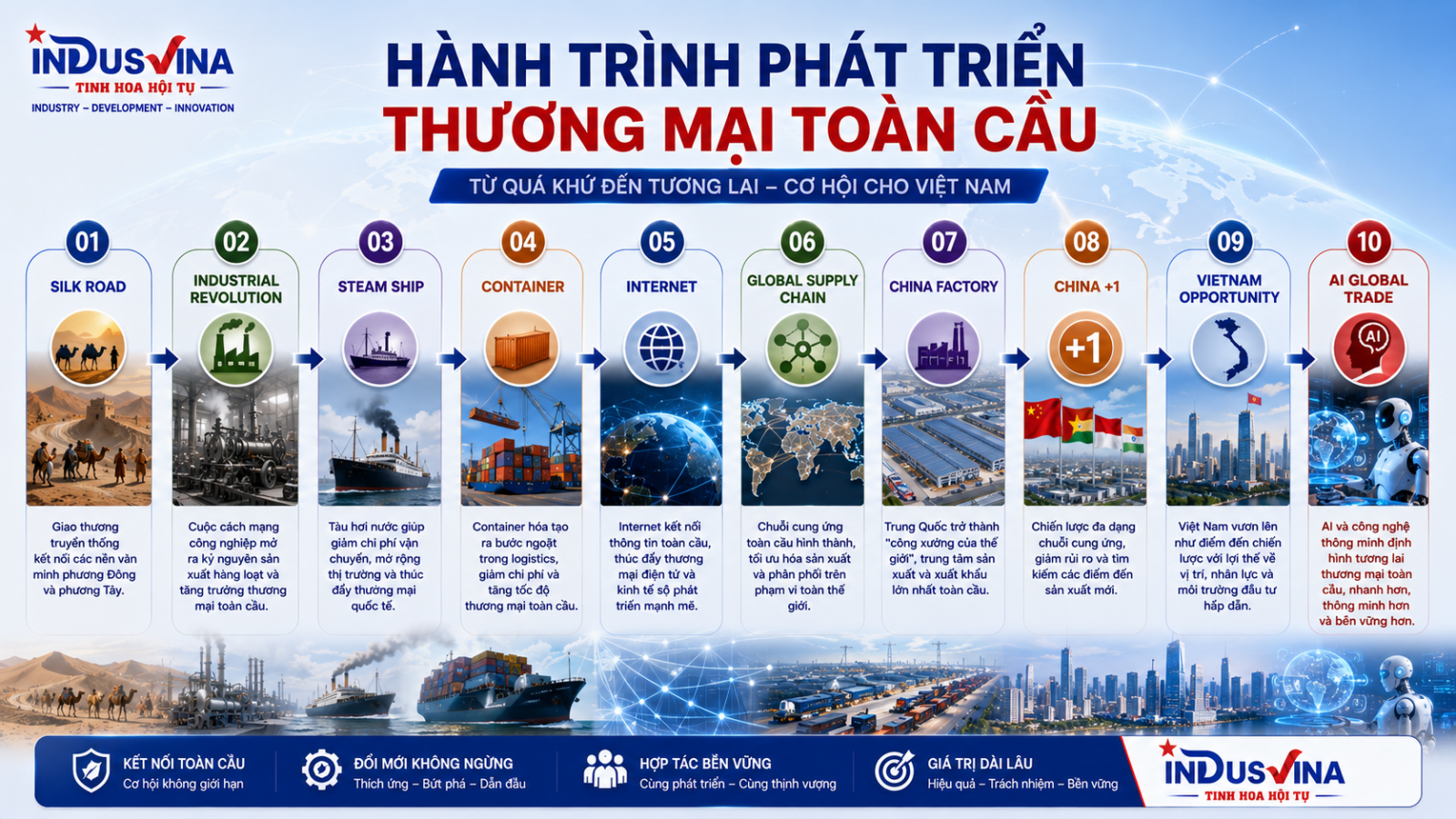
The history of world trade has never stood still. From the Silk Road, steamships, containers, and the Internet to global supply chains and artificial intelligence, every technological advance has changed how goods, capital, knowledge, and people connect.
For decades, efficiency was measured mainly by low cost and large scale. However, pandemics, geopolitical conflict, logistics disruption, and technological competition have led global companies to place greater emphasis on reliability, resilience, transparency, and supply diversification.
This is the foundation of China+1, supply chain diversification, near-market manufacturing, and cooperation with partners that offer stable operating environments. Vietnam is not outside this pattern; it is well positioned to receive these shifts and convert them into long-term development capacity.
2. A highly open economy
The World Bank identifies Vietnam as one of the world’s most trade-oriented and open economies. Trade as a share of GDP is close to 170%, showing that Vietnam’s production, investment, employment, and growth are deeply connected to international markets.
A high level of openness is a major advantage, but also a reminder that Vietnam must continuously improve productivity, local content, supporting industries, logistics quality, environmental standards, and its ability to meet increasingly demanding international market requirements.
3. Strategic geography and a long coastline
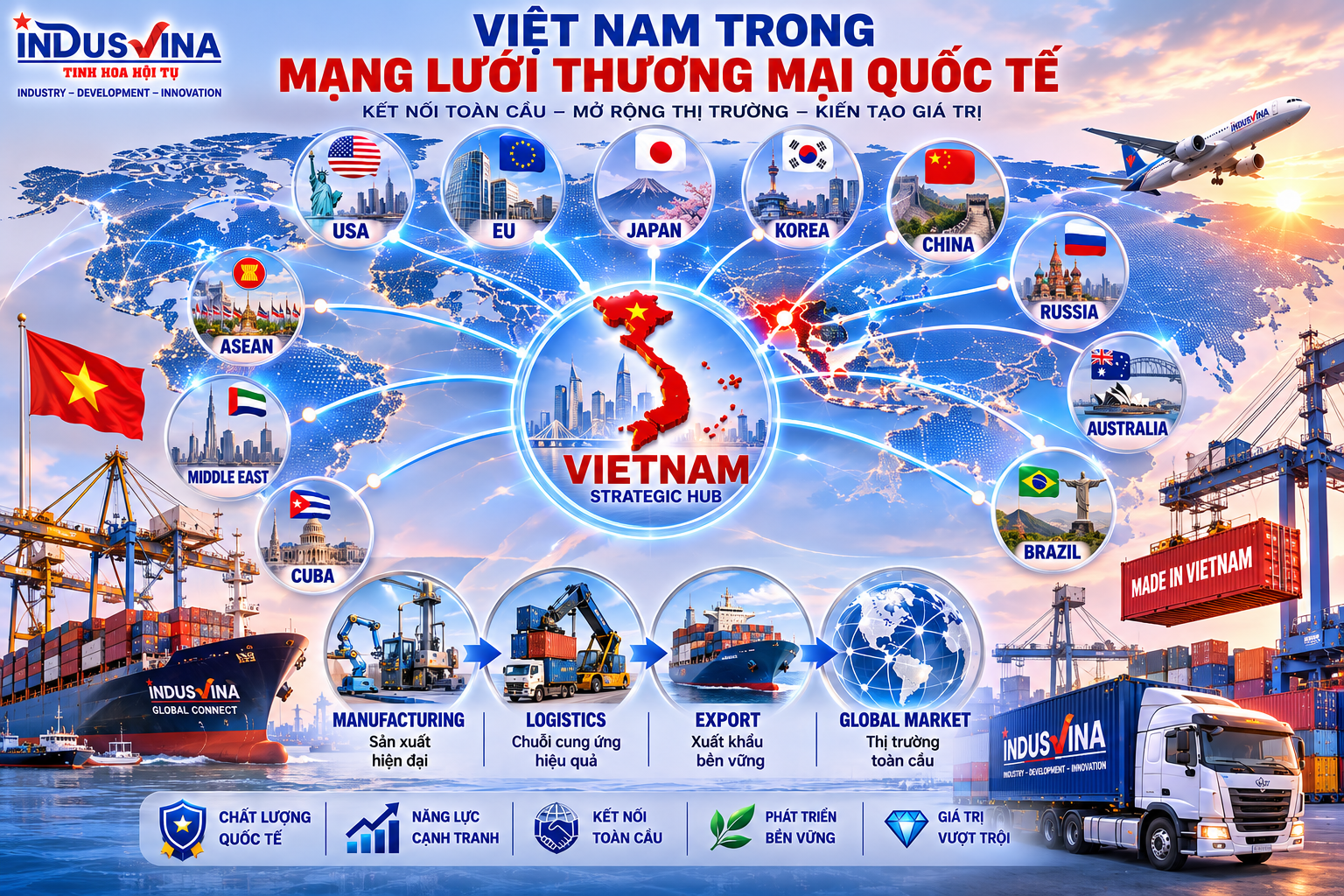
Vietnam lies on the eastern edge of the Indochinese Peninsula, facing the East Sea and close to major Asian manufacturing centers. This location is advantageous for linking ASEAN with Northeast Asia while providing access to maritime routes serving Europe, the Americas, the Middle East, and Pacific markets.
With a coastline of approximately 3.260 km, and a port system stretching across the North, Central, and South, Vietnam has favorable conditions for developing seaports, logistics services, multimodal transport, the marine economy, coastal industries, and international distribution centers.
Northern Vietnam
Hai Phong–Lach Huyen connects northern industrial zones with China and Northeast Asia.
Central Vietnam
Da Nang, Chu Lai, Dung Quat, and Quy Nhon have the potential to connect the East–West Economic Corridor and the Greater Mekong Subregion.
Southern Vietnam
Cai Mep–Thi Vai and Ho Chi Minh City’s port system connect the southern key economic region with long-haul maritime routes.
4. Vietnam’s geography creates an often-overlooked logistics advantage
Vietnam extends along a north–south axis, while remaining relatively narrow in many areas. As a result, many manufacturing centers, industrial parks, and raw-material regions are not far from the coast. As expressways, railways, inland container depots, and east–west corridors continue to improve, factory-to-port distances can be shortened and domestic transport costs can be optimized.
This advantage is not automatic. To convert geography into economic efficiency, Vietnam still needs integrated planning, stronger port–industrial park connections, faster customs clearance, modern warehousing, and fewer empty runs or breaks between transport modes.
5. Proximity to a major global manufacturing hub is a distinctive advantage
Vietnam shares a land border with China—one of the world’s largest centers for manufacturing, trade, and equipment supply. Geographic proximity provides easier access to components, machinery, materials, specialists, and a vast industrial ecosystem.
This advantage helps Vietnam integrate more rapidly into regional supply chains. However, the long-term objective cannot be limited to importing inputs for processing. Vietnam must gradually master design, technology, materials, standards, branding, and after-sales services in order to retain more value domestically.
6. A tropical climate—the foundation of agriculture, aquaculture, and forestry
Vietnam’s tropical monsoon climate, river systems, deltas, highlands, marine areas, and biodiversity support year-round production of rice, coffee, pepper, cashews, rubber, fruit, vegetables, seafood, timber, and other forest products.
In modern trade, advantage is not determined by output alone. Higher value comes from improved varieties, sustainable cultivation, deep processing, traceability, cold chains, packaging, safety standards, geographical indications, and national branding.
7. Advantages built by generations of Vietnamese people
Geography and climate provide the foundation, but people, institutions, and the organization of society ultimately determine whether a country can convert advantage into prosperity.
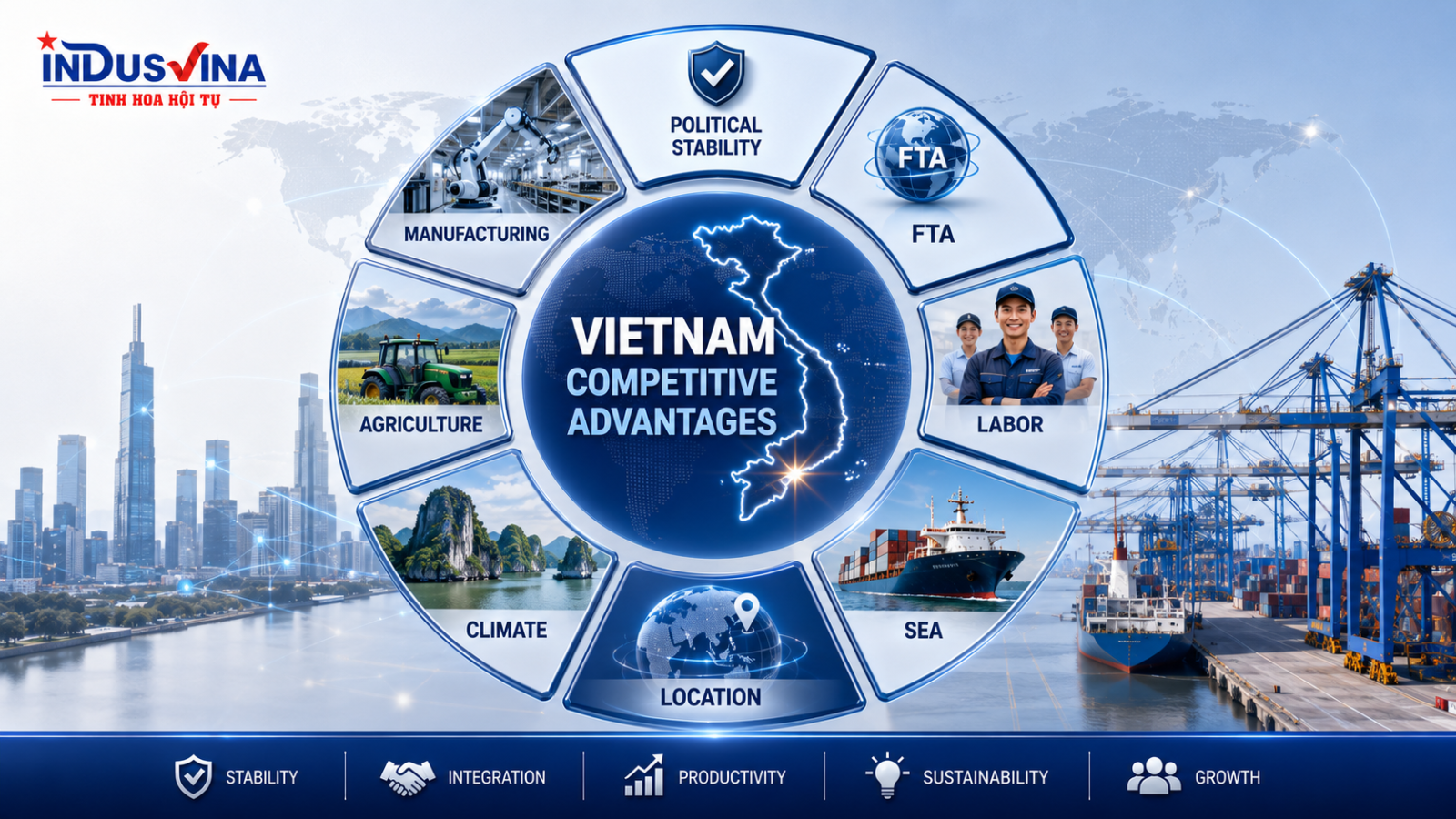
Political stability and an integration-oriented strategy
A stable environment supports long-term investment, infrastructure development, and consistent foreign policy.
An extensive FTA network
Vietnam can access preferential treatment in many major markets while being required to meet increasingly stringent standards.
An adaptable workforce
A large workforce, strong learning capacity, and steadily accumulated manufacturing experience.
Expanding manufacturing capacity
Electronics, mechanical engineering, textiles, footwear, furniture, food, materials, and technical services are developing together.
8. Governing through synergy and a spirit of service
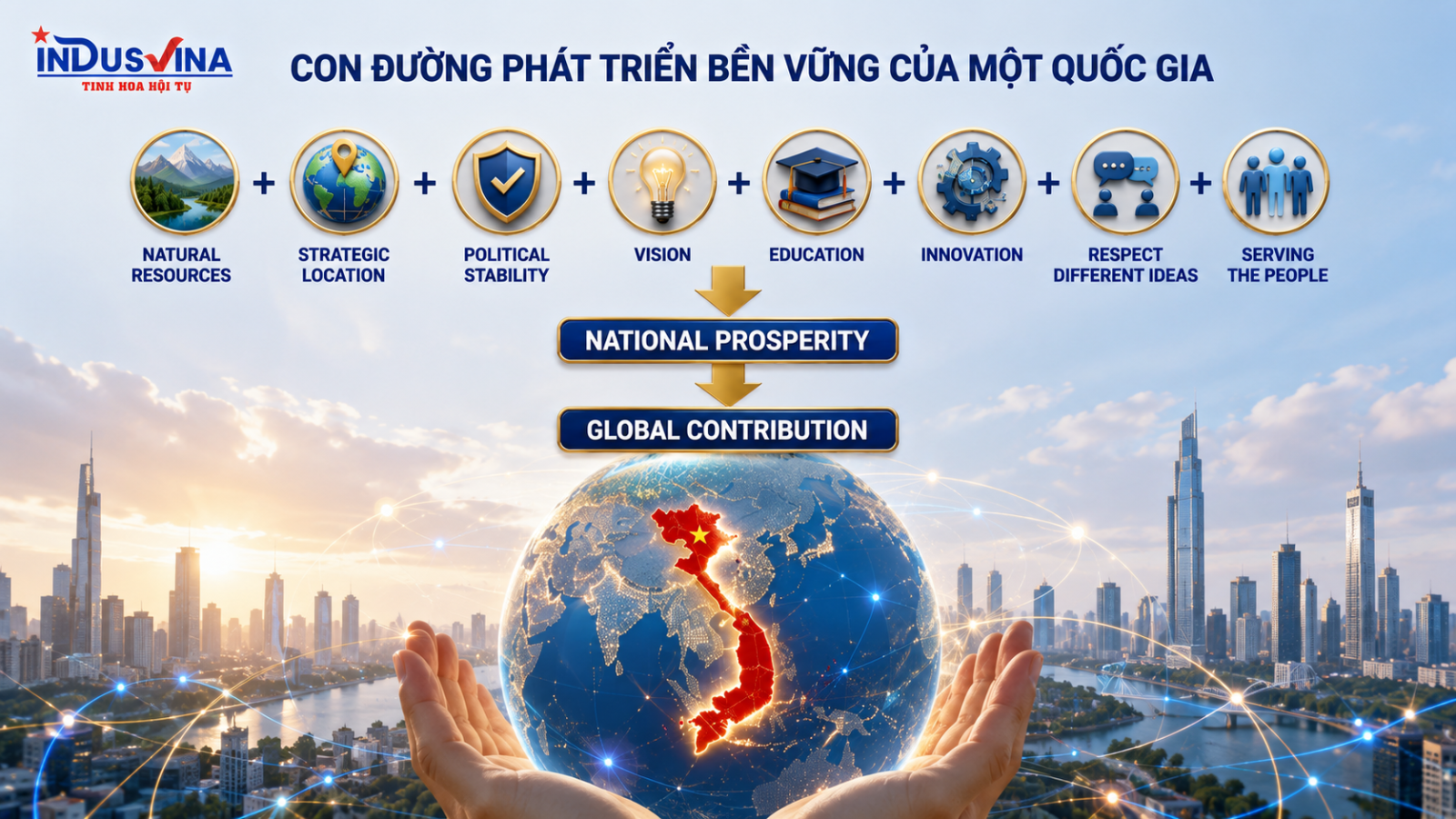
In my view, a country can develop sustainably only when power is understood as a responsibility to serve the nation and its people—not as an instrument for enrichment at any cost, opportunism, extraction, or the consolidation of personal interests.
When national resources are consumed by power struggles, internal conflict, and mutual obstruction, society loses time, trust, and valuable development opportunities. By contrast, when people work toward a purpose greater than themselves, knowledge, experience, and resources can combine into a powerful force.
However, unity does not mean that everyone must think alike. A progressive institution or society must respect differences, encourage responsible criticism, and listen to differing viewpoints. Constructive criticism helps identify risks, counter wishful thinking, prevent authoritarian decision-making, and open the way to better solutions.
What must be rejected is not disagreement, but the tendency to place power, prejudice, or private interests above the common good. A sound policy should be measured by its ability to improve people’s lives, create opportunities for workers, support responsible businesses, advance education, science, and infrastructure, and protect the environment for future generations.
9. Vietnam is moving deeper into global value chains
The World Bank notes that the Doi Moi reforms launched in 1986 helped transform Vietnam from one of the world’s poorest countries into a dynamic middle-income economy within a single generation. This achievement demonstrates Vietnam’s capacity for change when policy, people, and global trends align at the right moment.
The next stage, however, will be more difficult than the last. To achieve high-income status by 2045, Vietnam must move from scale expansion to productivity growth; from processing to design and innovation; and from merely participating in value chains to taking on higher-value roles within them.
10. Areas Vietnam must continue to improve
A responsible analysis cannot discuss advantages alone. Major opportunities always come with major reform requirements. Vietnam must continue addressing the bottlenecks that reduce the value retained within its economy.
Logistics cost and quality
Develop multimodal connectivity, inland container depots, cold storage, digital procedures, and shorter cargo dwell times.
Supporting industries and localization
Strengthen capacity in materials, components, molds, machinery, technical services, and lead firms.
Productivity and high-quality human resources
Modernize vocational education, digital skills, foreign languages, management, design, and research capacity.
Green standards and transparency
ESG, traceability, emissions reduction, clean energy, and data governance will increasingly determine market access.
Linking FDI with Vietnamese enterprises
Investment attraction should be accompanied by technology transfer, domestic supplier development, and stronger small and medium-sized enterprises.
Implementation institutions
Policy creates value only when it is transparent, stable, predictable, and consistently implemented.
11. The role of Vietnamese enterprises and INDUSVINA
Government creates the environment, infrastructure, and policy framework, but businesses are the actors that directly convert opportunity into products, jobs, income, and competitiveness. Every Vietnamese enterprise must learn to operate according to international standards, honor its commitments, control quality, demonstrate accountability, and build long-term relationships.
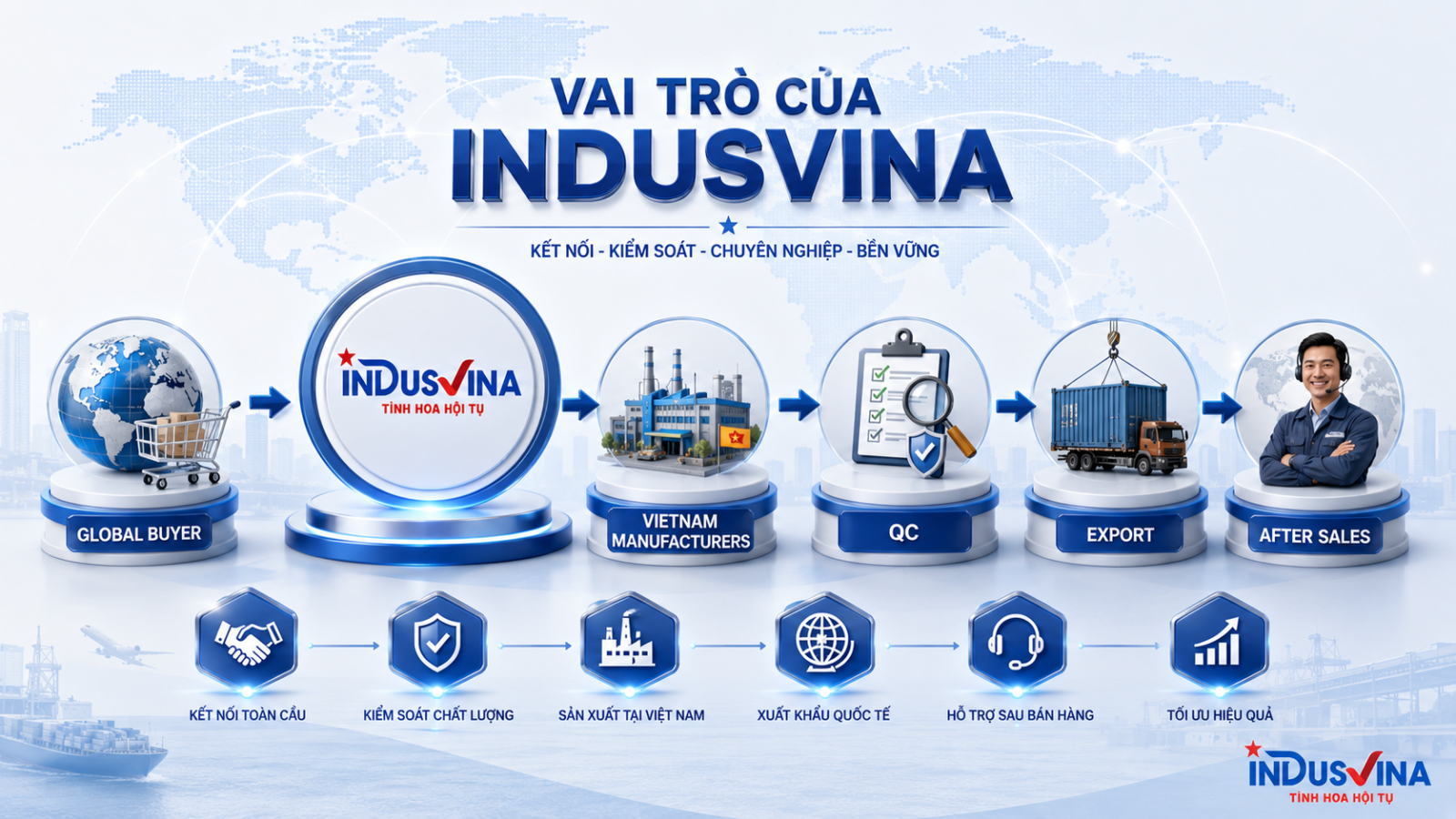
INDUSVINA positions itself as a responsible technical trading company that connects Vietnam’s manufacturing, construction, and supply capabilities with customers at home and abroad. Our role extends beyond introducing a supplier: it includes understanding requirements, assessing capabilities, coordinating technical matters, controlling quality, supporting logistics, and providing post-delivery assistance.
12. Conclusion—opportunity matters only when converted into capability
Vietnam has a favorable geographic position, a long coastline, diverse climatic conditions, a market of more than 100 million people, an extensive FTA network, political stability, and proximity to major Asian manufacturing centers. These are highly valuable foundations.
But geography does not create prosperity by itself. Natural resources do not automatically create strength. FTAs do not automatically become orders. Only when a country organizes its resources well, invests in people, respects differences, listens to criticism, nurtures innovation, and measures success by service to its people can these advantages combine into development capacity.
Vietnam’s rise in global trade is therefore not merely a story of exporting more. It is a journey toward higher-value products, more responsible businesses, a fairer society, and a nation better able to contribute positively to humanity.
Key references
The data and evidence-based observations in this article are drawn from official sources. The “Personal Perspective” section presents the author’s own views and is clearly separated for readers.
- World Bank – Viet Nam Overview: Overview of Vietnam’s economy and trade openness
- World Bank – Viet Nam 2045: Trading Up in a Changing World: Report on upgrading Vietnam’s position in global value chains
- World Bank Data – Trade (% of GDP), Viet Nam: Trade-to-GDP ratio data
- FTA Portal – Ministry of Industry and Trade: Information on Vietnam’s FTA network
- Government Portal – information on Vietnam’s geography and coastline: Geography of Vietnam
- General Statistics Office/Statistics Office – economic, population, and foreign trade data: https://www.gso.gov.vn/
Related articles and services
FAQ – Frequently Asked Questions
Why does Vietnam have an advantage in global trade?
Vietnam is close to major Asian manufacturing centers and benefits from a long coastline, an extensive port system, a broad FTA network, a stable environment, and expanding manufacturing capacity.
How does a long coastline benefit Vietnam’s logistics?
A long coastline allows Vietnam to develop multiple port clusters across the North, Central, and South, linking industrial parks and raw-material regions with international markets by sea.
What opportunities arise from Vietnam’s proximity to China?
Vietnam can gain faster access to machinery, components, materials, and a vast manufacturing ecosystem, while also receiving supply chains that are being diversified.
How does Vietnam’s tropical climate support exports?
Vietnam’s varied climate supports year-round agriculture, aquaculture, and forestry, but the highest value comes from deep processing, cold chains, traceability, and branding.
What will determine whether Vietnam can fully seize this opportunity?
Productivity, education, innovation, supporting industries, logistics quality, implementation capacity, green standards, and cooperation for the common good.
How does INDUSVINA support international customers?
INDUSVINA connects customers with manufacturing and supply capabilities in Vietnam, coordinates technical requirements, screens suppliers, controls quality, supports logistics, and provides post-delivery assistance.
Connect with INDUSVINA
INDUSVINA is ready to support customers and partners in sourcing from Vietnam, developing suppliers, coordinating production, controlling quality, managing logistics and exports, and delivering MRO, M&E, and construction solutions.


